They create ghosts: in conversation with artist/filmmaker Valentin Noujaïm
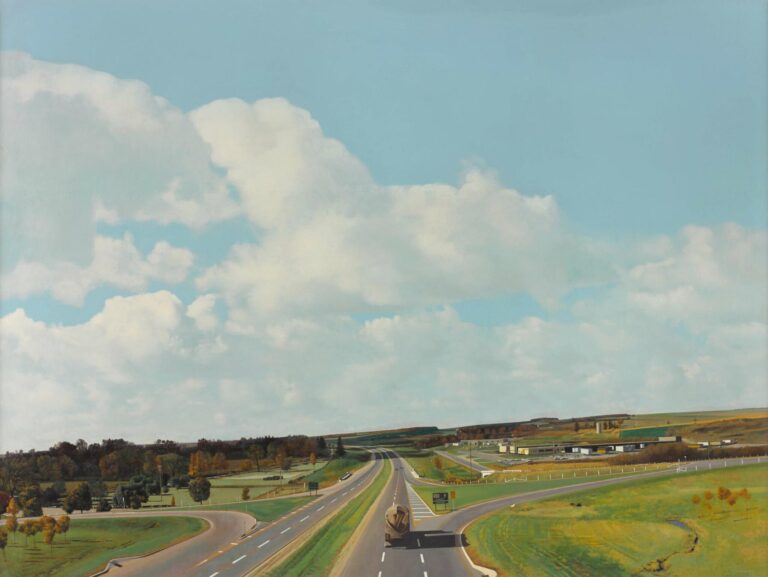
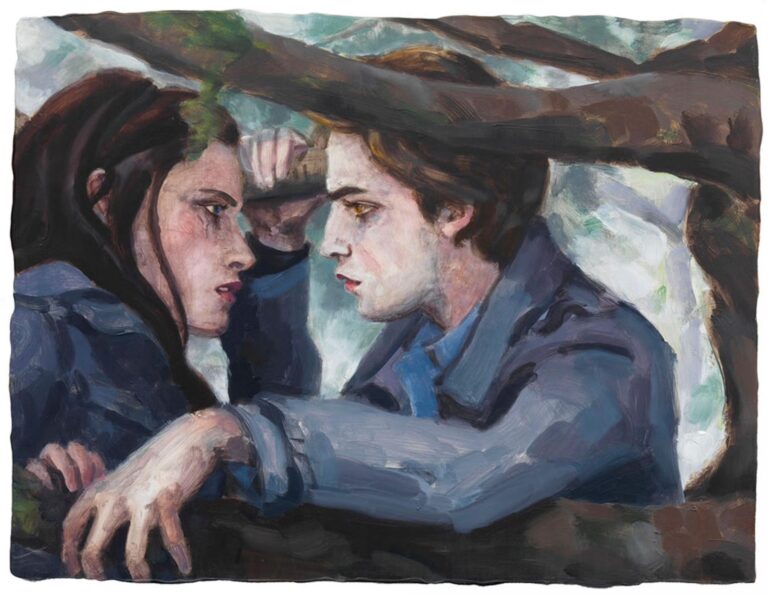
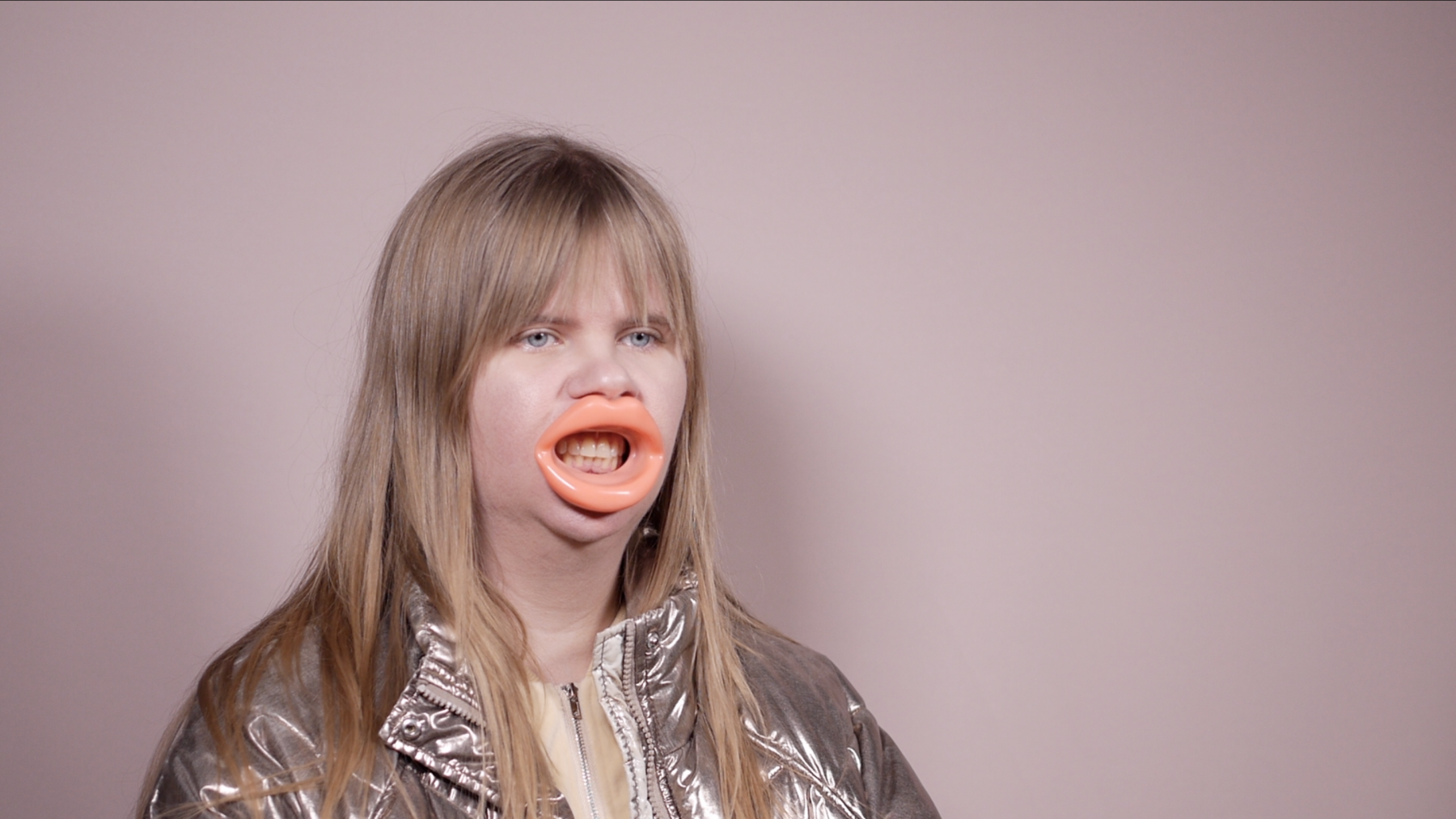
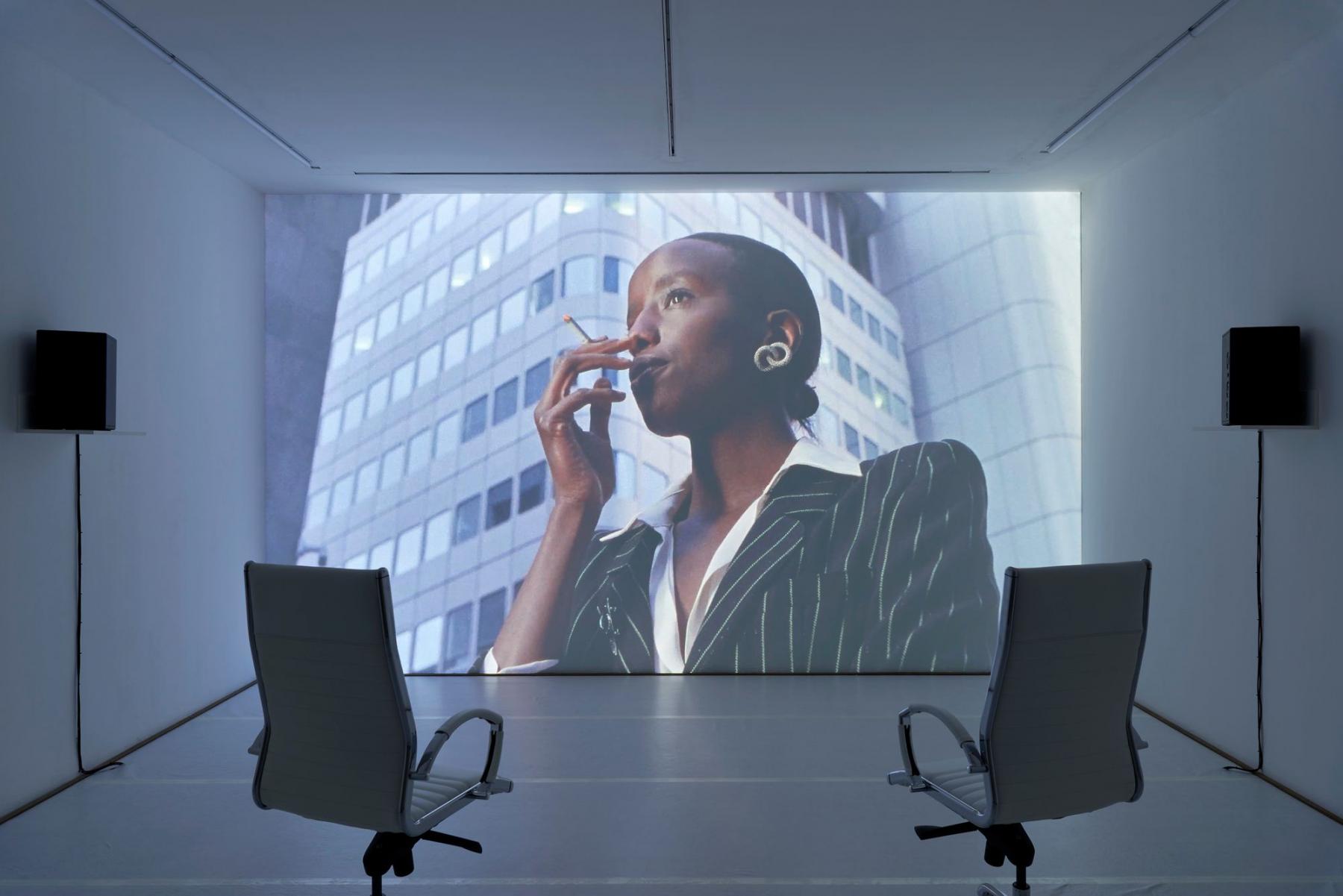
In the dim blue hue of an office light, we see a pair of eyes gloss over a floor strewn with dead, bloodied bodies. The eyes shudder and look out somewhere, into the middle distance; not at the walls of the conference room that enclose them, not directly at the glow of a computer screen. Below, a pair of hands continues to maniacally hit a keyboard. These furtive movements belong to Claire, played by the inimitable Kayije Kagame, the protagonist of filmmaker and artist Valentin Noujaïm’s chilling 2024 short film, To Exist Under Permanent Suspicion (2024), who we watch, sit alone, but not alone, become like stone, or statuary, in her dark, corporate chamber. What does she see? For nearly a decade, Valentin Noujaïm, who grew up in France as the child of Lebanese and Egyptian emigres, has been making films about the erasure of peoples and histories by the construct of empire and the bleak façades of “progress” erected in their stead. Le Défense, the looming business district to the west of Paris, built on razed shantytowns, gives the name to a trilogy of short films by Noujaïm (2022-25), each of which fuses documentary technique with mythic narrative to mine and undermine the monument’s rotting foundations. The first volume, Pacific Club (2022), reveals the story of an underground nightclub that existed in one of the district’s parking lots in the early 1980s, amid the electoral rise of the fascist Front National party in France and the start of the AIDS epidemic. The second, To Exist Under Permanent Suspicion, locates the brutalizing effects of this architecture on the psyche of a single worker. Demons to Diamonds (2025), which premiered as part of Noujaïm’s first solo exhibition, Pantheon, at the Kunsthalle Basel this past Spring, concludes the trilogy but offers no escape: every night at 6:59 pm, an individual falls from one of the neighborhood’s massive towers. Death arrives at a meticulously managed pace. Everyone is surveilled, no one spared. I recently spoke with Noujaïm about the places his characters go, when, like Claire, they find reprieve in the face of doom: “they create ghosts,” he told me. We spoke about the personal histories and political upheavals that inform his stark, unsparing vision, and about the specters of resistance that can appear, despite all odds, amid them. my work is very rooted in two worlds, or two dimensions, that are both very much a part of me—one’s real, and one is imaginary, and they feed one another, and sometimes there is a connection between them, and sometimes they create ghosts. I want to say that all three films that comprise your La Défense trilogy (2022–25) might be read as tragedies—but each tragedy reads slightly differently. In part, this is because of the way temporality works in your films: there’s always movement between past histories that cannot or should not be seen, very unfortunate present tenses, and occasionally, some future fantasy. In part, this has to do with form, as the films move between straightforward documentary and scripted narratives. Can you speak to the motivations behind these changes across the span of the trilogy? How do the films’ individual formal qualities extend into exhibition space? I agree, all three parts of La Défense are tragedies, and all three films are also portraits, although each one in very different ways. Demons, for example, is composed of several vignettes, but I think of the film as being a refraction of a single personality, as in M. Night Shyamalan’s film Split. But they are all set in this arena of Greek tragedy. One thing that happened over the course of making these films is that I didn't want to do what people were expecting me to do after every film. I remember when I finished the first part, Pacific Club (2023), people were like, “Oh, I can't wait for the second part,” with the assumption that the follow-up would be a similar kind of portrait or would be a documentary about the circulation of drugs at La Défense or about the HIV/AIDS moment. For me, it was important to build something that remained weird the whole time. The formal choices I made with each subsequent film were, in a sense, about breaking the expectations of someone who had seen the prior works. They are all responsive in this way. The second film breaks the rules established by the first, and the third breaks the rules established by the second. I realized while I was making these films how much of cinema that I love include elements that feel inexplicable. I also wanted to do that. It felt important to not hand over the keys to understanding to my audience—and to create a space that is perhaps not for everybody. More specifically, I think that for me, the second part of the La Défense trilogy, To Exist Under Permanent Suspicion (2023), remains the weirdest of the three films. It is, in some sense, kind of like an interlude between the other two. But emotionally, perhaps the heart of the trilogy. Much of the film is spent following Claire (played by Kayije Kagame), a businesswoman, around the icy neighborhood of La Défense. In some ways, she’s also very icy—her character doesn’t give very much to her audience; we never really have that much access to her psyche. Instead, the audience is meant to spend time with her confusion. This specific nature of the film had a lot to do with the way I installed it at the Kunsthalle in Basel for Pantheon. I was comfortable installing screens for parts I and III of La Défense in a very black box, or conventionally cinematic way, and with a bit of monumentality. But I chose to install the second part, Permanent Suspicion, differently—I wanted the film to be a bit like a prop in the exhibition room. The idea was to build a set of an unfinished office, to represent the unfinished mental space of this character, and as a way of gesturing toward her confusion within her own space. She doesn’t have access to why she does things—and so neither do you. More than any of your prior films, Demons to Diamonds is explicitly about death and destruction. Death appears in the film as part of everyday life, it is a televised event. At the heart of the film is a single character played by French actor Denis Lavant, who promises to destroy the glassy neighborhood of Le Défense. He’s a Borg-like character, “France’s only veritable unknown soldier,” made of flesh and knotty wires, who has an extremely embodied attachment to the disaffected dramas of alienation occurring above him. He prophesizes: “I’m destroying the Pantheon, so that everything can begin anew.” Is destruction something you believe in? Yes, I truly do believe in the destruction of empire, absolutely. In the films, the destruction that Levant’s character describes is, at least in part, inspired by the Christian narrative of apocalypse, wherein everything must be destroyed for a new Jerusalem to be built out of the rubble. He envisions this for the modernist monument above him. From the very beginning of this project, I have wanted to think about how modern states are becoming more gargantuan, more cannibalistic. I guess one of the most obvious examples of this is how the US treats its own cities, and the way that country hates its own citizens, but in France, as well, this hatred exists but in a more perverse, hidden way. But more importantly, I made the final two parts of my La Défense trilogy—To Exist Under Permanent Suspicion and Demons to Diamonds—just after October 2023, it became extremely important for me to address the genocide in Palestine. At one point, I was like, I don’t know why I would make a film about this specific neighborhood—it seems so disconnected from what is going on; so absurd, hopeless. I don't see why I would make a film that’s just about this neighborhood, or its architecture, when the problem or issue that I am concerned with is far larger and far more complex than the La Défense itself, or even the effects this kind of architecture has on the mental and physical states of the humans who inhabit it. The destruction that is envisioned in these two films, and the pessimism at the heart of these two films is very much influenced by the ongoing destruction of Gaza. At the same time, I wanted to make a film about this that did not use Gaza as a backdrop, but to use something that was a bit unreal. So, I made a film to resemble the daily life of people living in France, who do and do not know about the deaths that are constantly happening around them. I truly believe that the genocide happening in Gaza is the beginning of a new cycle of violence. It’s not the end of something or the beginning of something. It’s just the continuation of a much longer story. I suppose the feeling of destruction in the film is also psychological for me. As I made the last two parts of the trilogy, I felt myself turning against it. Like Lavant’s character, I wanted to destroy it, to make it suffer in a very sadistic way. The way a child has a favorite toy and then feels disgusted by it after a moment. In each of these films you use different registers of filmmaking and processing: iPhone footage is spliced with 3D animation, talking-head style documentary is intercut with CC-TV footage, etc. Whereas the first two films in the Le Défense trilogy focus on the individuals living and working in the neighborhood itself, the concluding chapter feels far more directly related to the surveillance technologies and weapons manufacturing that the corporate entities located at La Défense continue to outsource and bankroll. “No matter where you set foot, the system will catch you and will degrade you,” says Lavant’s character. Did you work with these different surveillance technologies yourself? What was that engagement like? No, I didn’t. All the CC-TV footage and the material that resembles surveillance footage was entirely fake. Either I edited to look a certain way in post-production, or I used a much older camera to film and then treated the material. You put an old camera at a certain angle in a room, and it does a lot of this work for you. It’s an easy image to replicate. There’s a lot of voyeuristic elements in the film, but the only moment wherein I felt myself becoming a voyeur on my subjects, or where the relationship between myself and the modes of “surveilling” became a bit murky, was this scene in Demons where there are people cleaning the glass windows. That’s all real—it was just me and my director of photography, watching people work in this neighborhood. I felt a bit like the Denis Lavant character, dooming the people of this cityscape. But that’s the only moment I played with it directly. La Défense is a profoundly anti-monumental film work. I’m curious how your dedication to constructing these anti-monuments for the screen changed or was challenged when you started working in space, with the sculptures and installation elements you created for your recent exhibition, Pantheon. What was this transition into three-dimensions like? How does sculpture allow you to think or make in ways that film does not? It was not easy an easy transition for me. I think I realized at some point that I’m not the big architect that I thought I was. Some people have everything planned from the beginning, but I had to work on each piece one at a time, and making Pantheon, it felt like I was building a Tower of Babel more than anything else. It was good, though. I enjoyed it. In the installations I created, I tried, where possible, to pay homage to cinema. I wanted people to be able to sit and watch the films comfortably—to create the conditions that allow for cinematic watching within the gallery space. The films were made with the cinema in mind, and I didn’t want to pretend that they were not (except for the second film, which was a bit more freeform). The sculptures and for the metallic plates I made are also very closely related to the cinematic works for me. With each film I make, I have an excess of ideas, more than I’m able to express or show in any one of them. So, making sculptures and plates felt like an opportunity to create a material extension of the ideas that I wasn’t able to fit into the films themselves. It was exciting for me to figure out way to be closer to my audience, especially with the sculptural works. They were placed very far from the bodies of the gallery visitors, and that was on purpose. These questions of placement and proximity were very new and interesting for me. What I found very interesting in making sculptures and in the plastic forms I want to work with now is that it allows for a totally new way of storytelling. I’m a storyteller—as you know, if you’ve seen the films. That’s my main practice. I love to do it. With objects in space, I’m given a new format to tell a different story. When you make a film, you lose a lot of connection with people: it’s done in private, you only ever interact with a screen, you don’t really get to see the public. It can even be entirely installed without you—you send the file off somewhere, and it’s over. There’s a bit of discretion with film. But with sculptures, you’re way more naked. You have to think about the people who will approach it and how, how close they will get to it, what they’re going to see from one angle verses another angle. What is the light doing, etc. For me sculpture gives me a new way to interact with people—and to be a bit less shy. Even if you don’t believe it, I’m shy. Next time I have an opportunity to work on a project like this, I would love to make the work for a space directly, rather than making work prior to understanding the space of its exhibition. It was hard to make all the work fit properly into the space, and to only think about the work in terms of arrangement and bodily introduction. It would be interesting to me to really make work that responds to the specificity of a space. It was a good first experience, but I’m excited to work in different ways. Oceania, 2024. Courtesy of the artist. Demons to Diamonds, 2025. Courtesy of the artist. Demons to Diamonds, 2025. Courtesy of the artist. To Exist Under Permanent Suspicion, 2024. Courtesy of the artist. Demons to Diamonds, 2025. Courtesy of the artist. In terms of filmmaking, what does fiction allow you to do that documentary doesn't? I’m not sure if there’s much of a difference for me. I think about the whole trilogy as being a documentary, even though there are certain very scripted elements to it. I wanted the third film to be about the feeling of being in France in 2025. The first two films are very nebulous—you don’t know where you are or when you are—and I felt the need, with the third film, to be more precise. It was important for me to have certain kinds of posters hanging on the walls (in the film), it was important to have Israel’s war crimes mentioned on the phone. If someone watches this movie in thirty years, I want them to feel the danger I feel at this moment in time. I want them to feel the fear I feel. In this sense, it is a documentary about what life is like for me and for people around me in France in 2025. It’s a testimony of the present. That said, I think I am back to fiction. I missed actors, and characters. And making the final part of the trilogy, Demons, was a great opportunity to build these relationships to these actors and characters. What films influenced the La Défense trilogy? It was important for me not to be referential in my filmmaking, however much I am inspired by other films. In a way, each part of La Défense is like a love letter to several films I love. It’s going to sound very basic but I love cinema, obviously. And so, one of the things I was trying to do with these films is to make an homage to films that I love, and that I was once ashamed of loving. I wanted to bring in my own personal cinephilia, rather than the ones that were forced on me by way of film school or the festival circuit. All three films, have references to films that I have always wanted to reproduce, or mess around with, or play with. Genre is supposed to be played with, and a short film is the best unit within which to do that. I think this kind of permission is what made making the La Défense trilogy, regardless of how dark the subject matter is, maybe the most fun I ever had making films. Because I was able to play around with my own reference materials in a way, without worrying so much about it. For To Exist Under Permanent Suspicion, I’m very indebted to the films of Brian de Palma, and Orson Welles’s The Lady of Shanghai, for its use of light and color. Demons to Diamonds has the most explicit references, or partial homages, to other films. Alex Proyas’s 1998 film Dark City was a massive influence, as was Gakuryū Ishii’s 1994 film Angel Dust—a film I love. Shinya Tsukamoto’s Tetsuo: The Iron Man (1989), and its sequel, Tetsuo II: Body Hammer (1992), were big inspirations for me in designing the character that Denis Lavant plays, and when it came to the way I wanted my actors to deliver their dialog, I paid a lot of attention Julianne Moore’s performance as Carol White in Todd Haynes’s film Safe (1995). Also, Hitchcock. More than other films though, I was really inspired by the actors I was working with, and the histories of cinema that they either came from or represent. For instance, the Canadian actress Alexandra Stewart plays a role in Demons. It’s a brief part—she’s seen speaking into a telephone to someone off-screen. For me, it was important for me to have her in the film because, Stewart, who is 85 and at the end of her career, she represents a kind of disappearing cinematic tradition. I also had the pleasure of working with Anne Benoît, a famous actor in France, but more in the world of theater and popular film—she’s an actor that my parents recognize, for instance. Madame Solange, the leather-clad dominatrix in the film has starred in a lot of Moroccan films and is an extremely famous actress in the Arab world. This is all to say that there’s a lot of film references in my casting. I wanted to bring together a certain landscape of actors and actresses, each of whom are different kinds of actors and have different ways of being actors. It was really beautiful to build the casting in this way, and to put this elder generation of actors in contact with a whole generation of younger performers. Let’s talk about your latest release, Oceania, which is a very character-driven film. It feels more connected to some of your earlier films, such as Blue Star (2019) and Before Forgetting Heliopolis (2019). It also feels deeply personal. How did this film come about? The process of making Oceania was much different than the process of making La Défense. The latter was shot in rapid fire—three films completed in two years, the fastest thing I’ve ever done. The process of making Oceania was much slower, and more closely followed the rules for how films for the cinema are made. And yes, I do think of Oceania as the third part in a trilogy after Blue Star and Heliopolis. Like Demons to Diamonds, Oceania expanded and extended the ideas that germinated in these first two films, but also productively broke the cycle they created. Oceania is the most autobiographic film I ever made. The family in the film in certain ways resembles my own, and the narrative has to do with how a character finds himself amid the discovery of someone else’s disappearance. The main character, Najib (played by Adil Bettahrat) is also very much like me at 16. And because of this, the relationship I had with Adil, who played Najib, felt extremely intense; It was so weird to direct an actor who is 16 years-old and who, in many ways, resembles what you imagined yourself to be at that age. I’m not sure I’ve ever had a relationship with an actor in this way before. Adil is an extremely shy, introverted person. At times, it was really difficult to shoot with him because he has such a hard time opening himself up to the world, but this was a quality I was looking for my character. I was looking for a non-actor, in a way. The film really absorbed the feelings we were having when we made it. We shot the film November 2023, and I was very depressed. I had a great team, and thankfully we were all on the same page. But I think the film itself feels much more depressing or heavy than it did as a script because of the moment we made it. We were running on fumes, without any energy, and with the weight of feeling quite horrible about what it means to make images in a time of genocide. I think about the stories I want to tell as rooted in Marxist thinking, which is to say that everything in them, including sex, is linked to social class, or to a conflict between classes. More than the films you’ve made before, both Demons to Diamonds1 and Oceania depict sex and queer characters in more explicit or direct ways. One of the vignettes in Demons to Diamonds revolves a couple engaging in some kink, and in Oceania, an unseen character has died of AIDS—which is to say, he appears to stand in for a whole history. How, if at all, do you think about sex or sexuality in your films? That’s a very complex question, I feel. My films flirt with different kinds of sexuality, but they don’t go into it completely. There is a distance from sex and from physical interaction, you are right, but it is always present. The leather kink scene in Demons to Diamonds was the first time that I had ever shot anything explicitly related to sex. To be honest, I’ve never really cared about making films about gayness or gay sex in a way. It’s part of my life and my identity, of course, but it’s not part of my art. I think about the stories I want to tell as rooted in Marxist thinking, which is to say that everything in them, including sex, is linked to social class, or to a conflict between classes. So, when sex appears in my films, it’s through that lens. When sex appears in Demons to Diamonds, it happens between a businessman and someone he has hired to dominate him in this very fancy office building. To me, it’s less a scene about sex as such and more about how a person struggles with questions of power and money. It is also a reference to a real death of a famous businessman who worked at La Défense, was found clad in full leather gear and died of asphyxiation. In Oceania the question of sexuality was tricky for me, because I didn’t want to impose a full-fledged sexuality onto a 16-year-old character. I wanted to show his desire, but without showing it. Several people have asked me about the character’s sexuality—like, “Is Najib gay?”—and my answer to them has been, “It’s really whatever you’d like.” It almost seems irrelevant to me what his sexuality is. But it was something I was asked when I was developing the film and preparing it for the Film Commission. They were like, “Oh, it’s too bad that Najib and his friend do not fall in love.” I thought this was pretty stupid—the question of romance is beside the point, the film is in fact about his discovery of social class, of decolonization, and of an international anti-colonial struggle. In Oceania, Najib has a kind of awakening when he comes across a VHS tape that contains archival footage of the Pan-African Festival of Algiers in 1969 (PANAF), a momentous event that brought together post-colonial and liberationist political figures, dancers, and musicians, for a 12-day event. Can you tell me more about the significance of his discovery? Najib’s discovery of an Arab decolonization movement is one of the most autobiographical things about the film. He is discovering, in a sense, how his own family is implicated within these larger revolutionary struggles. I grew up in the Lebanese diaspora in France. My parents, who left Lebanon during the civil war, suffered a lot of severe trauma during the war and in its aftermath, when they were exiled in France. This was something they never really talked about. However, growing up in France, what I did hear about constantly was the Algerian war. I was confused about these things—were they the same war? Because, in France, to be Arab is to be an Algerian man, mostly, and to be Muslim. So, when you are an Arab from another region, or if you’re a Christian Arab, there’s much less of a sense of what your history is, you’re not considered Arab in the same way. No one mentions Lebanon in the film, which was important. It’s funny though—I sent a screener of this film to a Lebanese friend, the writer Edwin Nasr, we talked about this situation a lot, and about how the actress that plays Najib’s mother in Oceania (Darina Al Joundi) is a recognizable figure in Lebanon, she acted in several of Ghassan Salhab’s films, has this intense tension, these nerves, this violence inside of he that we recognize a certain generation of Lebanese women, who survived the civil war, to also have. This felt important—that the war isn’t explicitly mentioned, but that it’s present. You can see it, and some people will know it. So, in a sense, for me, Oceania is very much a reflection of what it was to grow up in France and learn about the Lebanese civil war. It was very confusing, as a teen. These questions: what is being Algerian, what is being an Arab—these are questions that are all rooted in what it means to live in France. Your films are filled with these beautiful moments where characters look out into the middle distance. We watch them contemplate something they don’t totally understand—they’re looking at an architecture or a television screen or a glassy window and they enter a whole world we cannot see. What happens to your characters in these moments? Where do they go?2 It’s a game [laughs]. I think it’s because my films and my work is very rooted in two worlds, or two dimensions, that are both very much a part of me—one’s real, and one is imaginary, and they feed one another, and sometimes there is a connection between them, and sometimes they create ghosts. Those ghosts are my films. I like to think that those moments that are not so clear, in which the characters are looking at something outside of the frame or they leave the film entirely, they leave the real world. They go into this other dimension, they create ghosts. They also leave the door open for the audience to see something that doesn’t exist, or to think about something that’s not directly in the film. They leave the door open for things that don’t happen in the film to happen. What are you working on now? I’m working on my feature film, and I’m working on a few different exhibitions that are also related to La Défense. I’m reading a lot, and I want to make a new trilogy of films about angels. The above conversation was conducted by Shiv Kotecha, a writer and editor living in New York. Kotecha is a 2025 editorial resident with Public Parking. This is his second contribution as part of a four-part creative exploration with our publication. Return to discover his forthcoming pieces. Special thank you to Valentin Noujaïm for participating so generously in the above conversation. Cover image: Demons to Diamonds, 2025. Courtesy of the artist.