
Longform
Spatial Being, Temporal Harvest: in conversation with filmmaker, Courtney Stephens
“Almost all things beckon us to feeling, and turnings send wind-messages,” wrote poet Rainer Maria Rilke. “Who tallies what we do? Draws us away from the old abandoned years?” To tally––in other words, to compute––is a particularly finite act. It precludes being, produces mere information, and deals in the discrete and the objective. It processes those former years, that “everything,” as an object of data and deduction. What we do, however, is quite un-computable; it is those old abandoned years that we remember, at once a collection and a collecting, a process in flux rather than a stable object. It…
Read More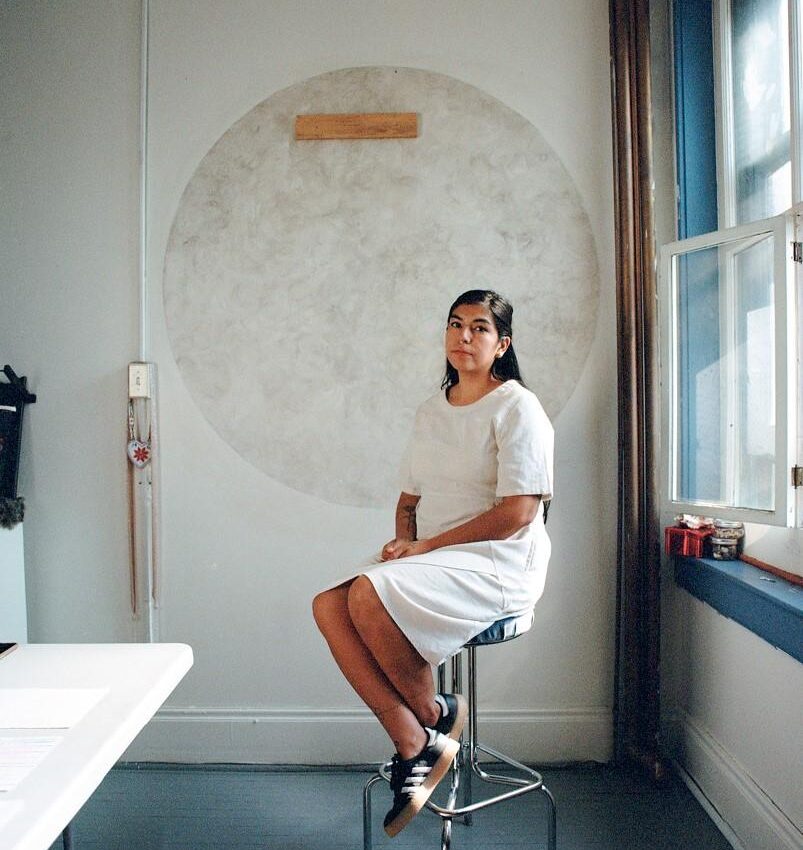
Bound by Smoke: Audie Murray’s Vanishing Acts
I know a lot of things about Audie Murray. I’m not sure how much of it is relevant to her art practice. I know her brother works on trucks in his spare time and I know what high school she went to. She has told me about her dreams. I know her child’s name and how she takes her coffee. I know how her kitchen is arranged and what is in the fridge: Babybel cheese, firm tofu, and at least three varieties of berries. She told me that when she is depressed and the idea of cooking food is unimaginable,…
Read More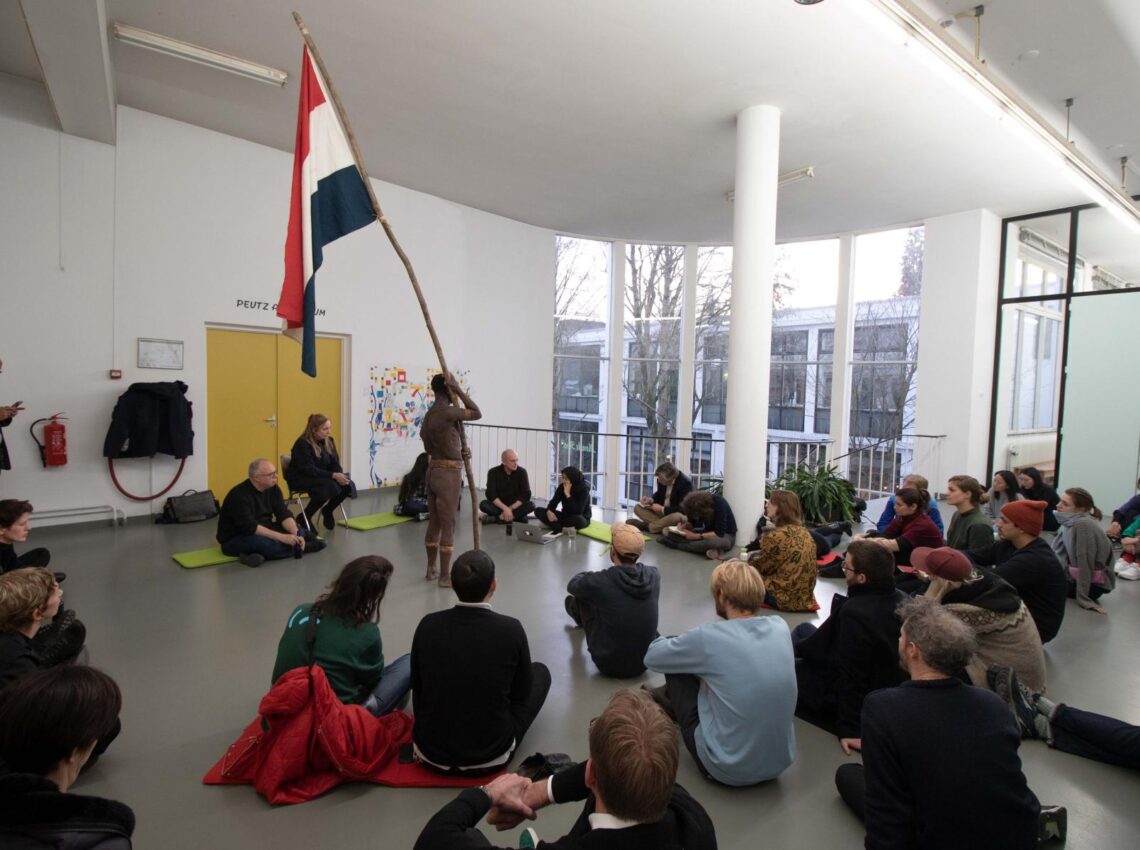
The Personal is Decolonial: in conversation with arts worker Riksa Afiaty
In Indonesian, we have an idiom to describe a person like Riksa Afiaty: kecil kecil cabe rawit. Kecil means small. Cabe rawit is a type of chili that really stings. The idiom means to describe a small person who has an astounding energy and capabilities not to be underestimated because of their small figure. Riksa talks for hours during the interview, with almost nothing to be left unmentioned, and could go on for even longer if she didn’t have to run on other errands. I met Riksa for the first time at KUNCI Study Forum & Collective, a place where we often warmly gather….
Read More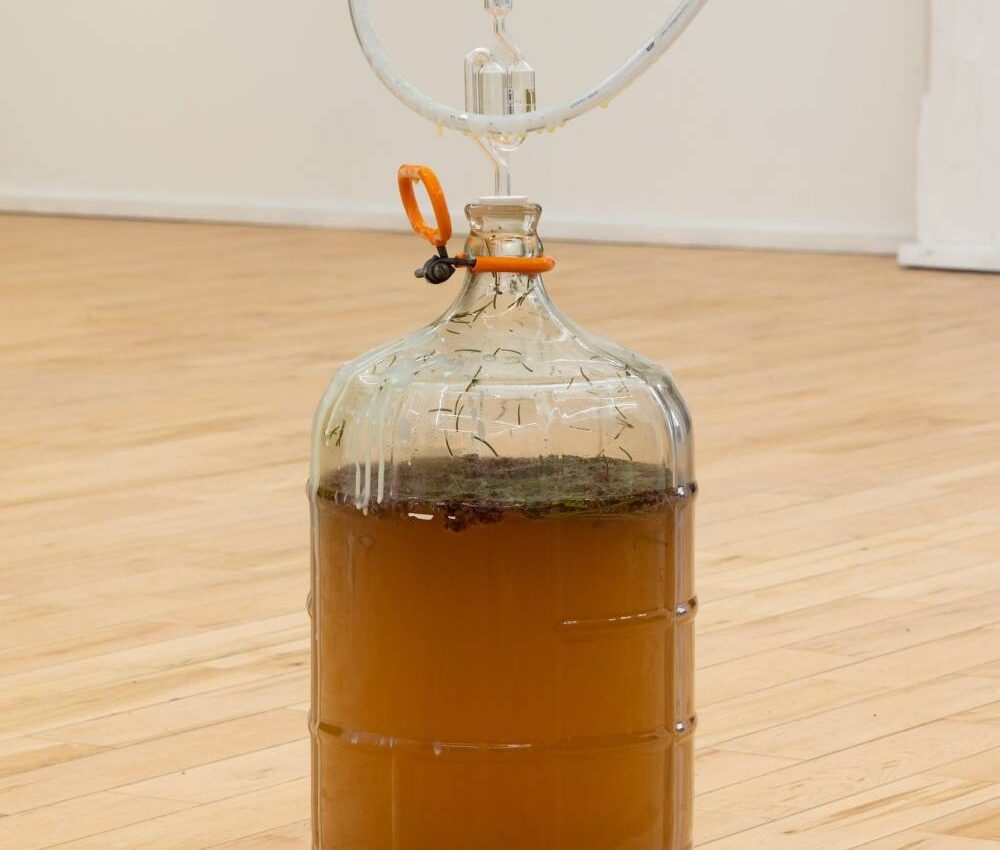
Metabolizing our way through: in conversation with artist Maria Simmons
A milky, earthy aftertaste lingers in my mouth. An egg-sized lump of fresh butter sits in the palm of my hand, roughly enveloped in bark and moss and zealously held together by twine. My bundle is ready to be buried in the mire. Hamilton-based artist and curator Maria Simmons creates and nurtures sculptural installations that function as living ecosystems unto themselves. Last January, we had a chance to reconnect during a bog butter workshop and tasting, which Simmons hosted as part of a series of food-based artistic interventions presented by the Creative Food Research Collaboratory. Gathered around simple foods —…
Read More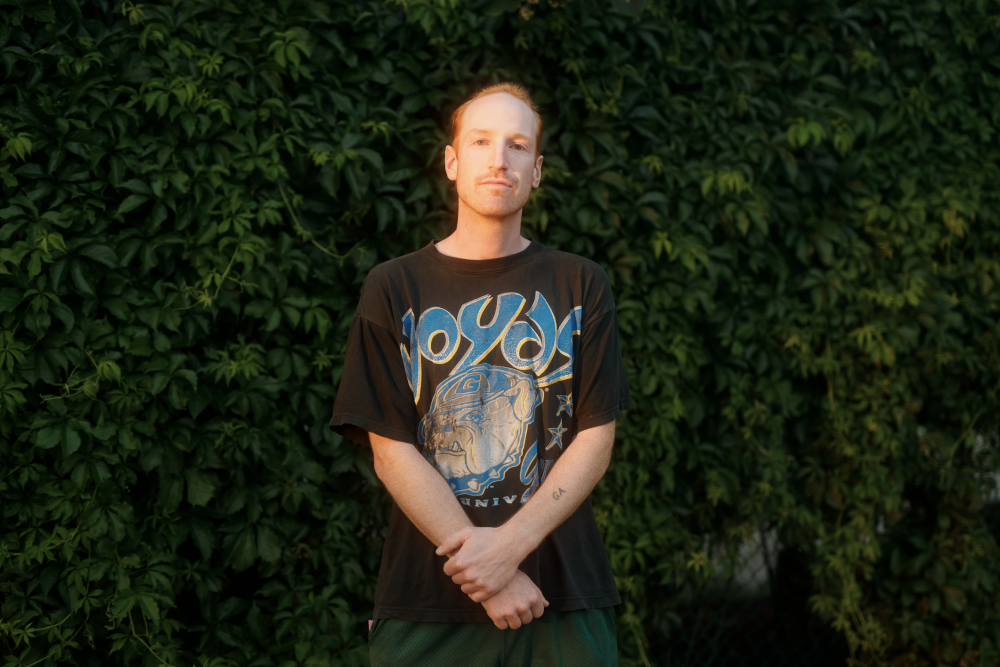
“We’re always making the space that we’re in”: in conversation with author Owen Toews
Owen Toews’s debut novel Island Falls (2023) is hard to describe. Half tale of unfolding friendship, half clinical report of a segregated mill town in the Canadian prairies, the enigmatic text plays with genre and form, raising questions about how space is produced and contested. The result is both charming and unsettling. Characters wrestle with how to respond to the violent structures that surround them and never really figure it out. In the end, we’re left to ponder the thorny relationship between trying to make sense of things and actually creating something better. Overall, the effect is galvanizing. Toews invites the reader to…
Read More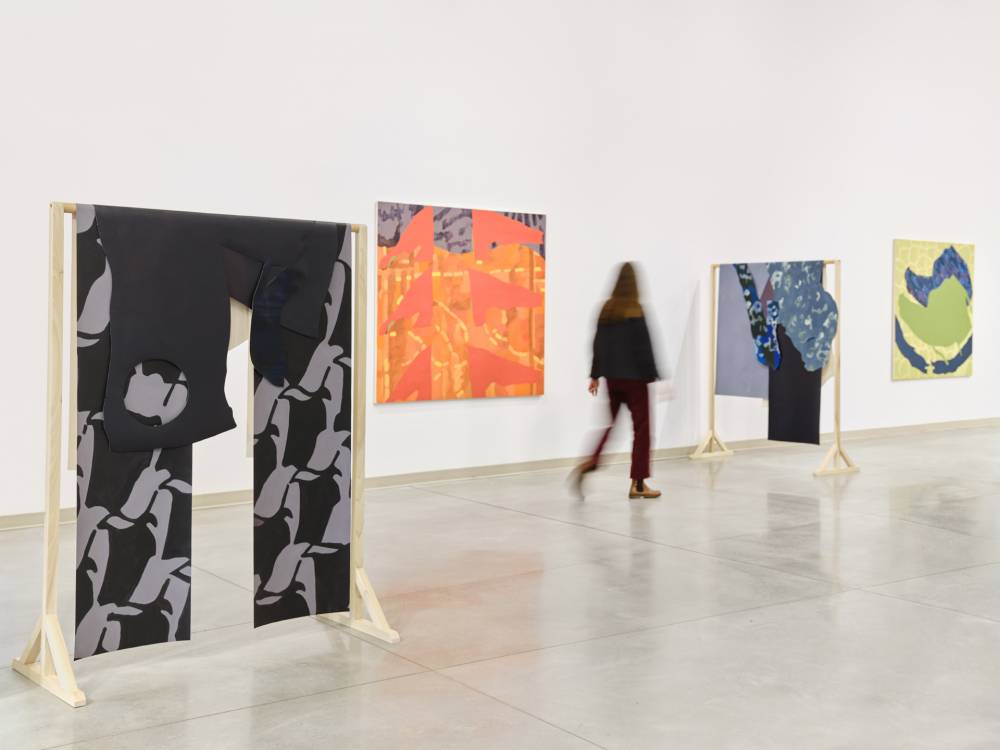
“I want to interrogate the discomfort I have around being a painter”: in conversation with artist M.E. Sparks
M.E. Sparks is an artist and educator based in Winnipeg, Manitoba, Treaty 1 Territory. Born in Kenora, Ontario, Sparks completed her MFA from Emily Carr University and her BFA from NSCAD University. She has received numerous awards and grants for her work from the Canada Council for the Arts and the BC Arts Council, among others, has been involved in several international residency programs, and has exhibited internationally. Sparks’s practice is deeply rooted in the history of painting. As an art historian, I was eager to speak to her about her influences and how the past continues to inform the…
Read More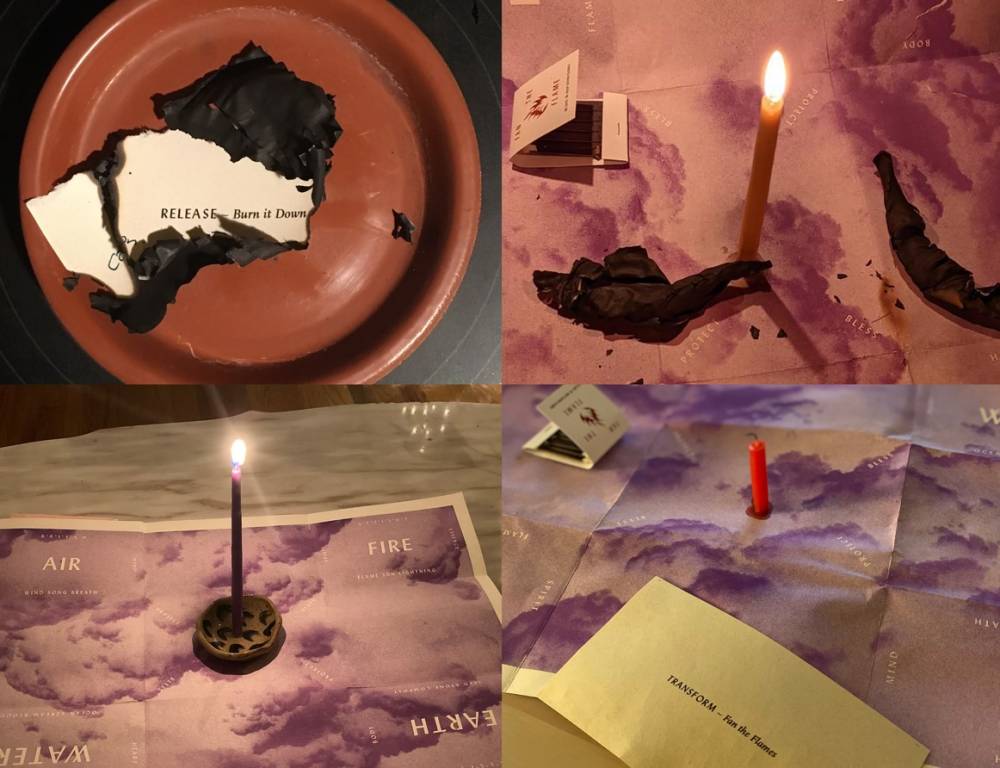
A Time of Returning and No Return: in conversation with Indu Vashist, Cecilia Berkovic and Amy Fung
In response to the Spring Equinox, Public Parking Editorial Resident Amy Fung invited multidisciplinary cultural workers Indu Vashist and Cecilia Berkovic to engage in a mindful and honest conversation on themes of cycles, practice, violence, and endurance to mark this year’s Summer Solstice. Meeting and working in the Toronto arts scene in the 2010s, Berkovic, Fung, and Vashist reflect on the present era of what it means to be alive. Amy Fung (Amy): Let’s start at the beginning. Ceci, Indu, how do we know each other? Cecilia Berkovic (Ceci): Well Amy, I met you through Images [Festival] when I worked there…
Read More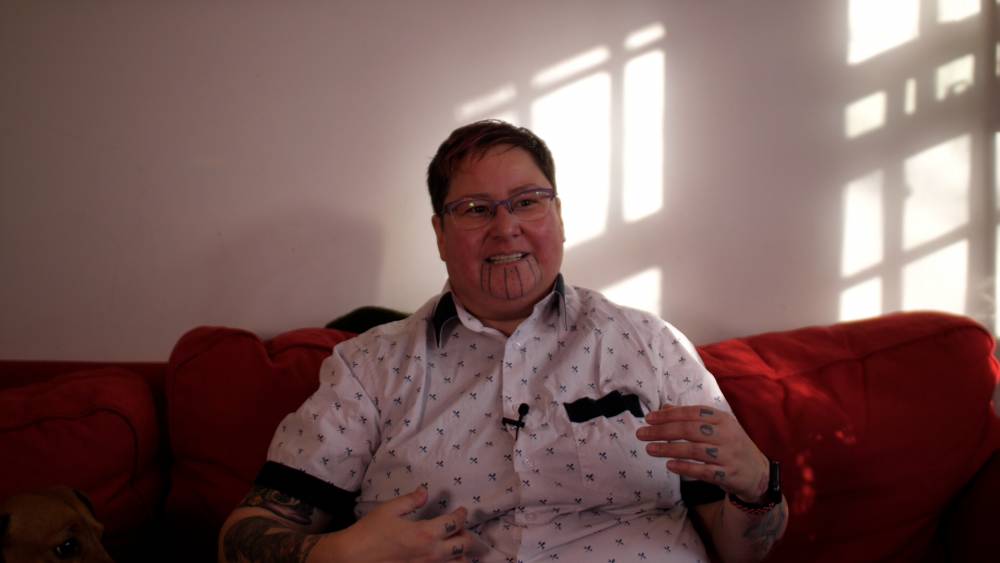
“I like to think there are alternatives”: in conversation with artist Theo Jean Cuthand
Theo Jean Cuthand’s videos are full of good lines, but there’s no time to dwell on them. They’re delivered without pause, almost matter-of-factly, in unhurried monologues that span the video’s run time. In Extractions (2019), he describes the terrifying lumber scrap incinerator in Merritt, where he spent four intolerable months as a teen, “like something in a Disney movie symbolizing death and anguish.” Earlier, over footage of a series of explosions in an open pit mine, he notes benignly, “I like to think there are alternatives.” In Less Lethal Fetishes (2019), he uses gas masks to meditate on kink culture and the art world’s toxic relationship with industry….
Read More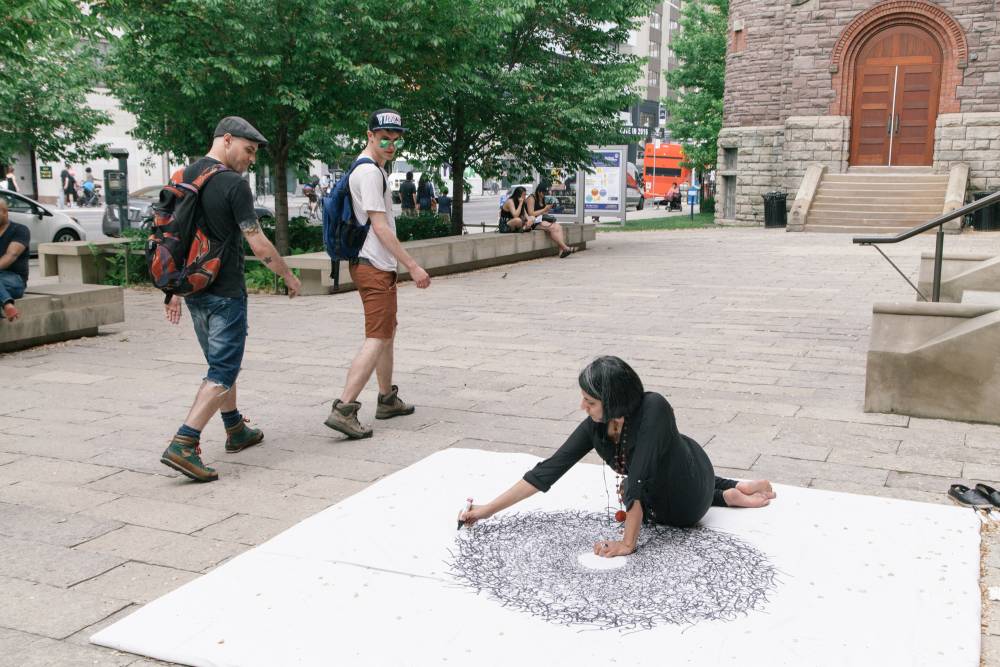
Poetic Activism and Muslim Faith: in conversation with Tazeen Qayyum
Tazeen Qayyum is a Pakistani-Canadian artist based in Toronto. She was trained in the South Asian and Persian traditions of miniaturist painting before she began the mixed-media practice which she sustains today. During the month of Ramadan, I wanted to speak with her about what it is like to be a practicing Muslim as well as a contemporary artist working in Canada. I was also interested in her experience making work that is conceptually driven and shaped by culture and faith. For example, in her iconic archival ink on paper works, Qayyum repeats a word written in Urdu script to…
Read More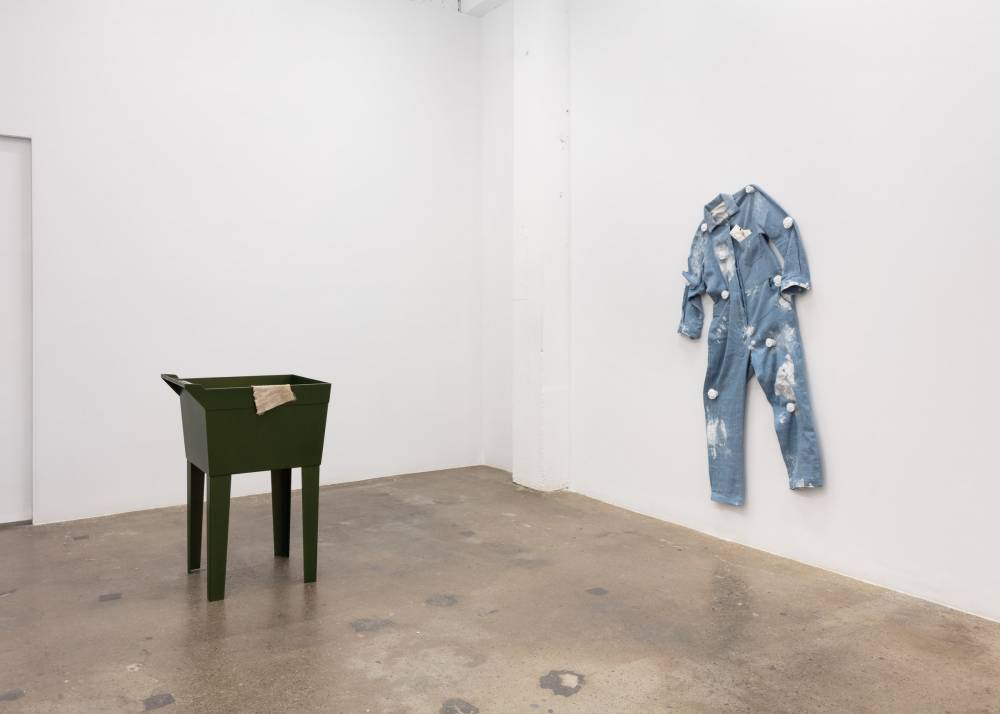
Opening your face like a flower: in conversation with Anne Low
On the second Monday in December, I click the link, open a window, and see myself. Instinctively, I adjust my posture. Anne Low has joined your meeting room. A couple of months earlier, I visited Low’s solo exhibition Bury Me at Franz Kaka on Dupont Street in Toronto. The show featured five works that engage with the domestic and the decorative. Inspired by pre-industrialized cloth samples, Low’s woven textiles are presented in sculptural forms; each work gestures towards the material evidence of housework: cleaning, mending, storing, tending, and washing. An artist-weaver, Low works in sculpture, installation, textiles, and printmaking. After completing her…
Read More