
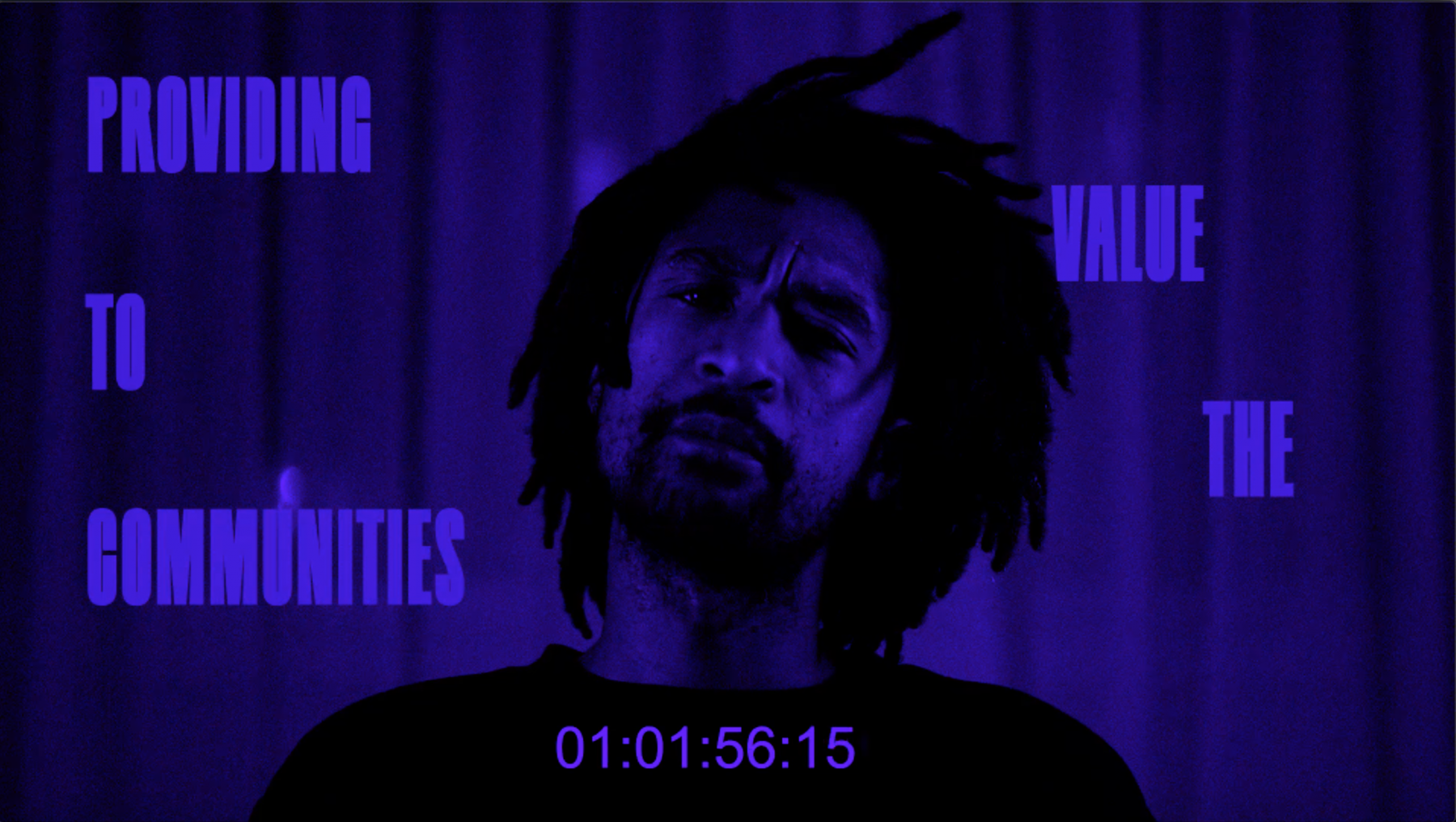
Longform
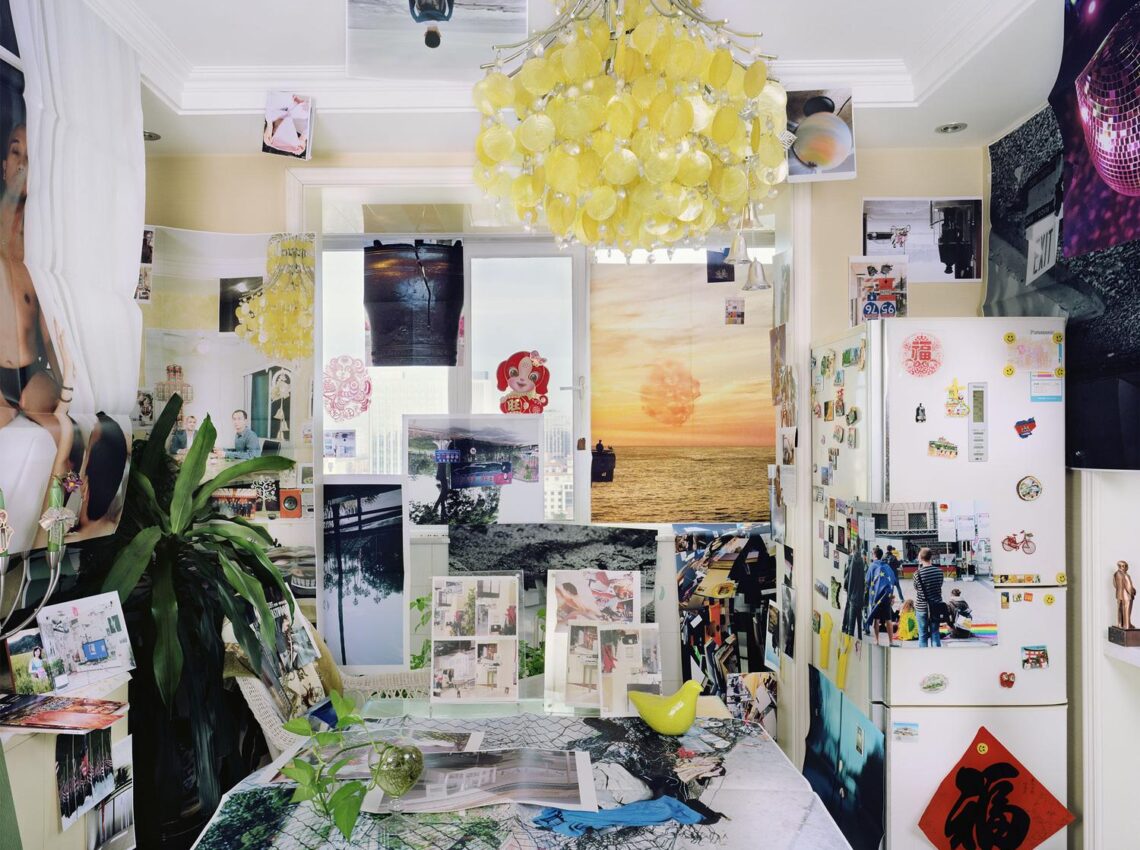
Lost in Parallel Worlds: in conversation with Guanyu Xu
Guanyu Xu is an artist working with photography and cultural iconography to create compositions that deliberately disorient the viewer. His project Temporarily Censored Home has reached international acclaim, currently showing at the International Center of Photography in New York. In this work, he visits his family home in China and creates elaborate photo installations by mining images from his personal photographic archive, printing them out, and physically placing them within domestic settings. Many of these photos are from his life in Chicago and draw on aspects of his queerness – a part of his life that he does not share with his family…
Read More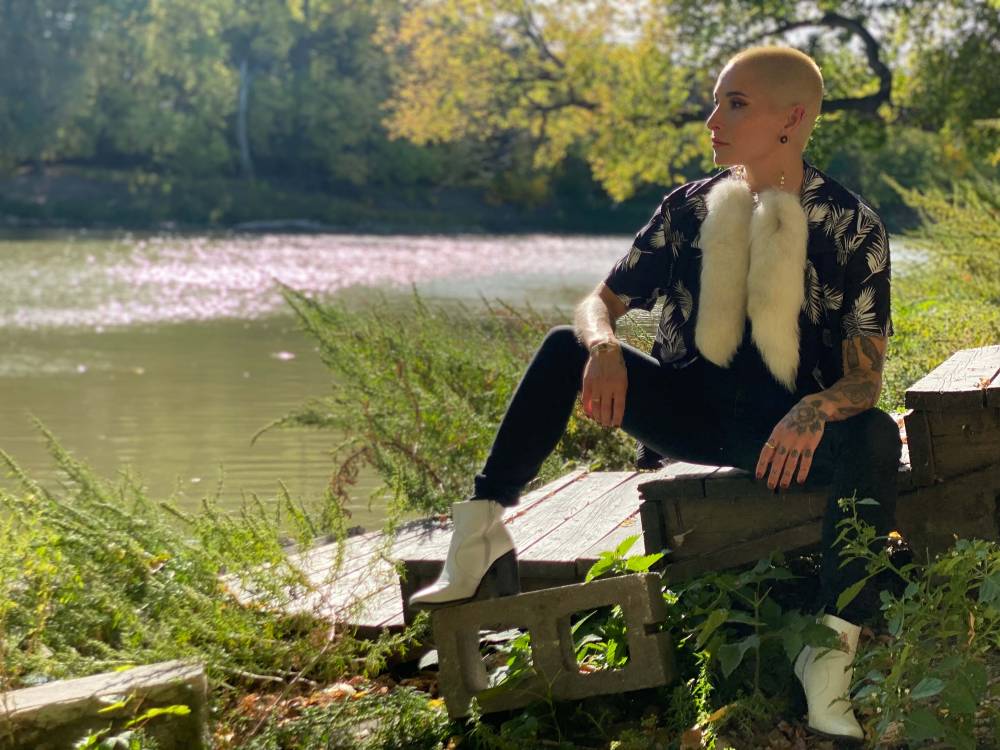
Desirability, relationality, and dreaming of what the gallery can hold: in conversation with Adrienne Huard
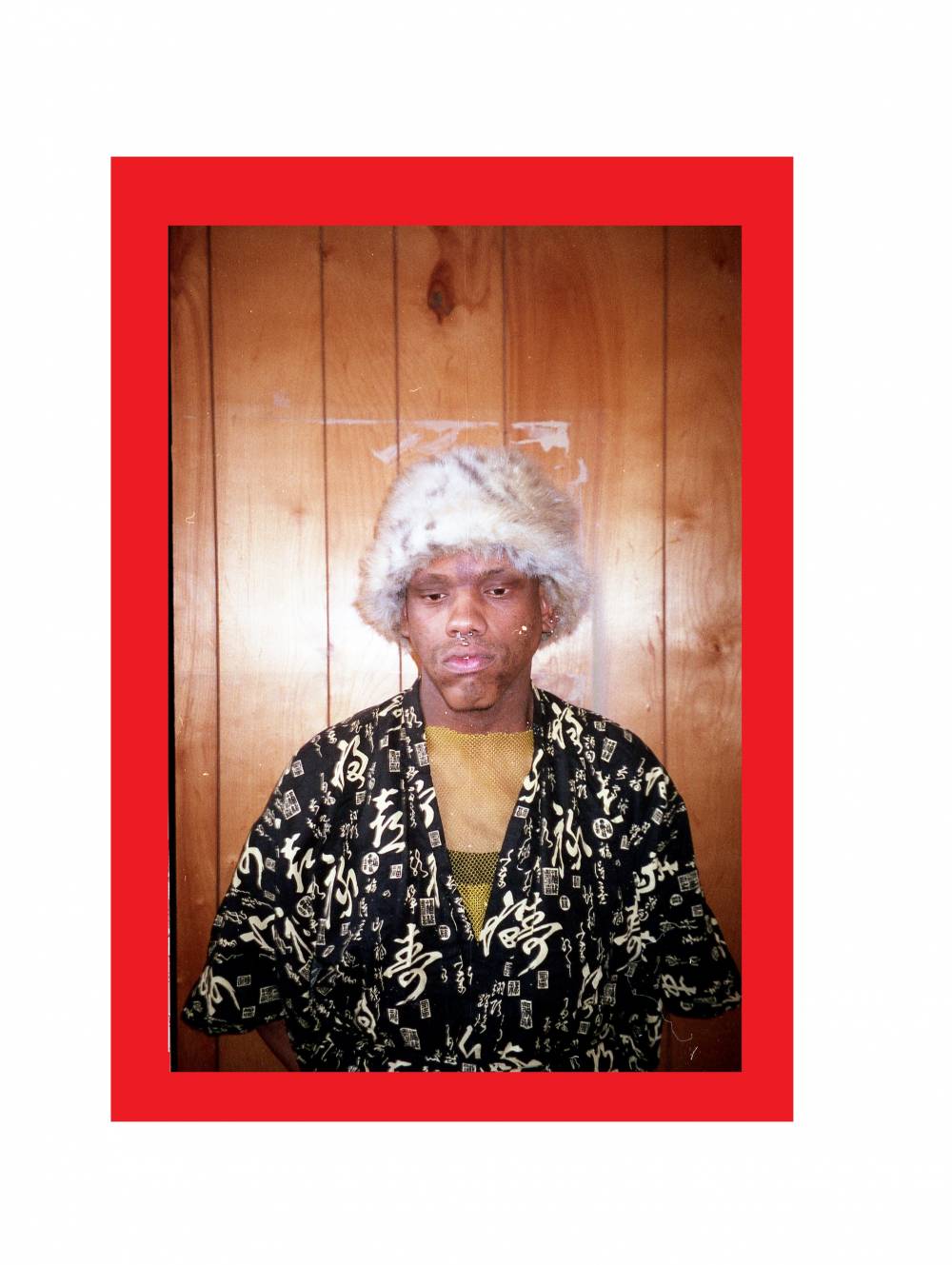
Adrienne Huard is a Two-Spirit/Indigiqueer Anishinaabe curator, academic, art critic, scholar, and performer. As a Two-Spirit Indigiqueer, Huard brings a unique focus and position to their research on desire within Two-Spirit and queer Indigenous visual culture on the prairies where they are embedded in the community and draw on these networks in inspiring ways. A citizen of Couchiching First Nation, Ontario, Huard was born and raised in Miiskwaagamiwiziibiing/Winnipeg. After graduating in 2012 from the University of Manitoba with a Bachelor of Fine Arts majoring in photography, they pursued and completed a Bachelor in Art history at Concordia University in Tio’tià:ke/Montreal. Thereafter, Huard completed OCAD’s…
Read More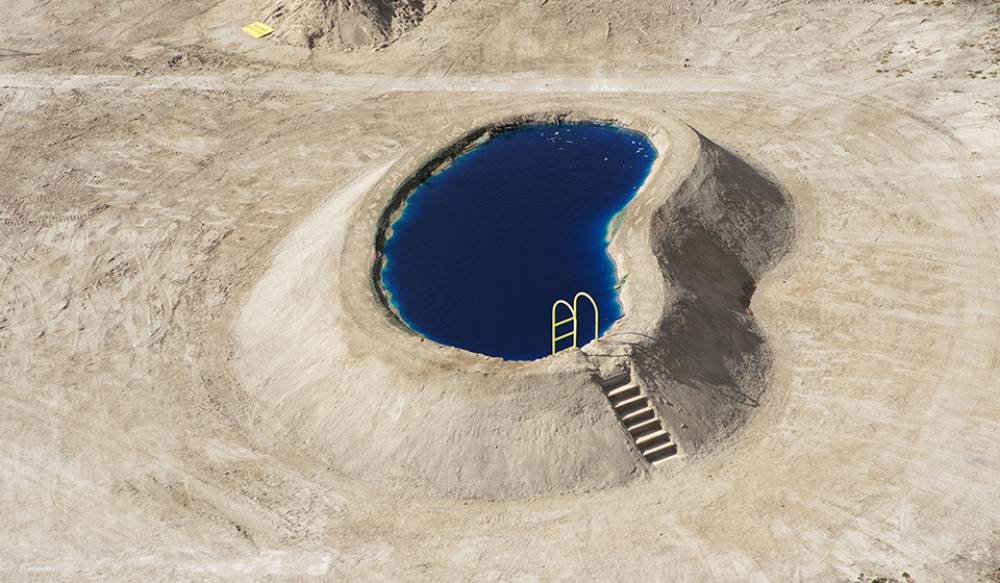
Extractive Implication and Potlatch as Method: in conversation with Tsēmā Igharas
Last summer, I biked to Point Douglas, an eclectic, old Winnipeg neighbourhood dotted with stately historical buildings and defunct industrial sites, to find Tsēmā Igharas’ installation, Tailings Pool. Housed on an empty lot, the piece seemed, from a distance, to be a large, nondescript pile of gravel, not unlike the rubble of a construction site. But as I approached, the smooth, angled sides of the mound came into focus, and a jaunty neon yellow swimming ladder revealed itself, straddling the edge. Climbing up to look in, I found a bean-shaped pool of tantalizing blue, glinting in the dry heat, noxious yet seductive. Playfully…
Read More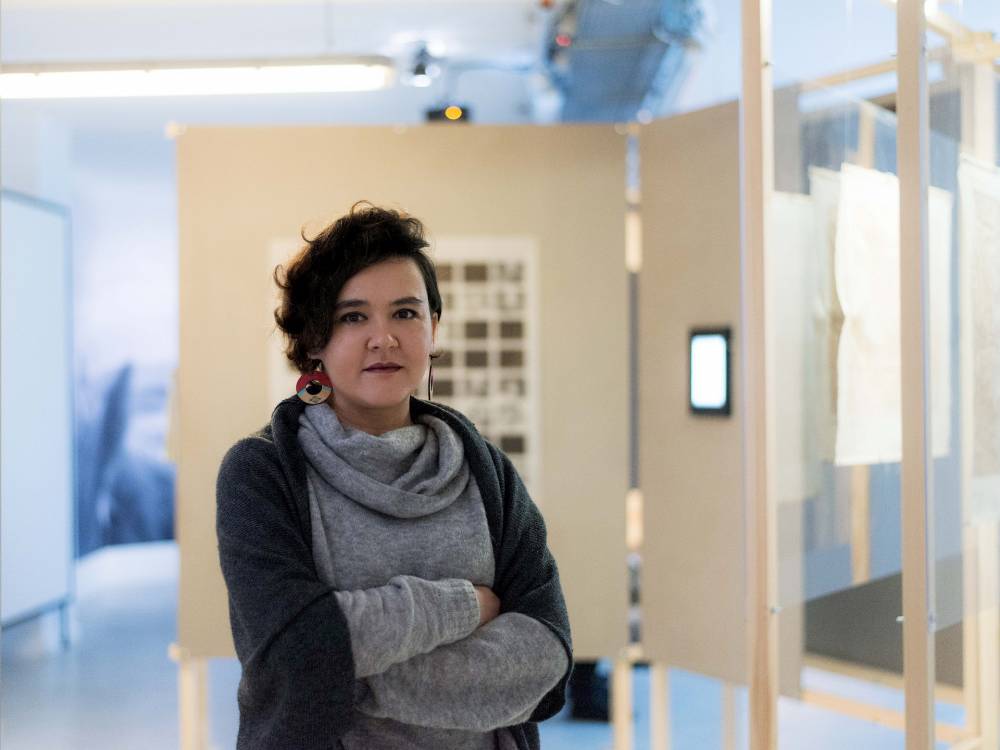
Listening against the grain: in conversation with Kamila Metwaly
Curator, researcher and writer Kamila Metwaly’s dedicated long engagement with Egyptian born composer and musicologist Halim El-Dabh (1921-2017) has involved digging through university archives and libraries, connecting with his friends and family, and collaborating with a transnational group, who has followed El-Dabh’s work closely. Originally from Cairo, Metwaly moved to Berlin in 2017. She encountered El-Dabh’s work, Ta’abir Al-Zaar—one of the earliest known electronically composed works—purely through a chance encounter, and connected with him shortly before his death. “I knew all about John Cage, musique concrète and Pierre Schaeffer in Egypt, but I didn’t have a clue about Halim,” Metwaly told me, as she talked about her…
Read More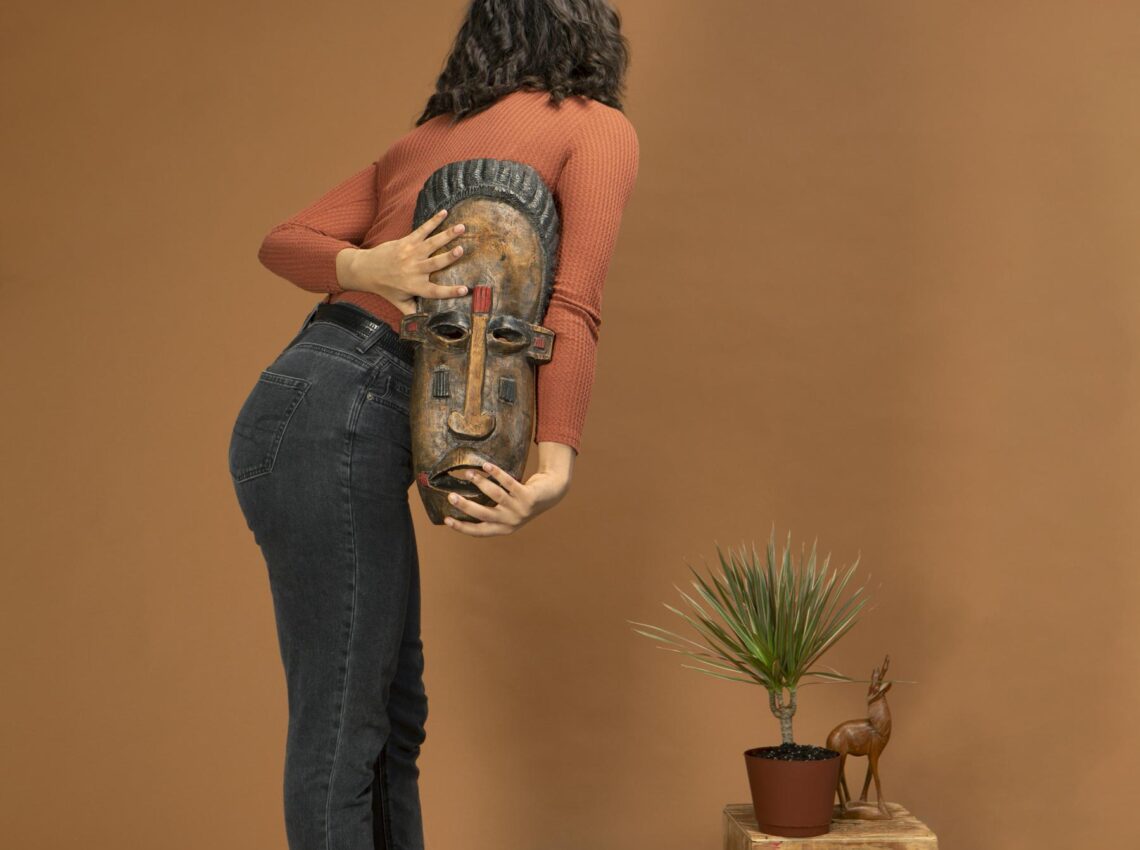
Making of a monument: in conversation with Hannah Somers
The last couple of years has seen an immense surge in the toppling of monuments of white European colonizers across the Americas. The monumentality of these long overdue take-downs is also met with mixed feelings, even for the communities who have experienced and continue to live with the atrocities of centuries of “new world building.” It goes without saying that the repair, the re-building, the re-imagination of world orders does not happen overnight. I am reminded of the many who go on living, resisting colonial figures well outside of their bronze bodies and into the aftermath of their fall. Much…
Read More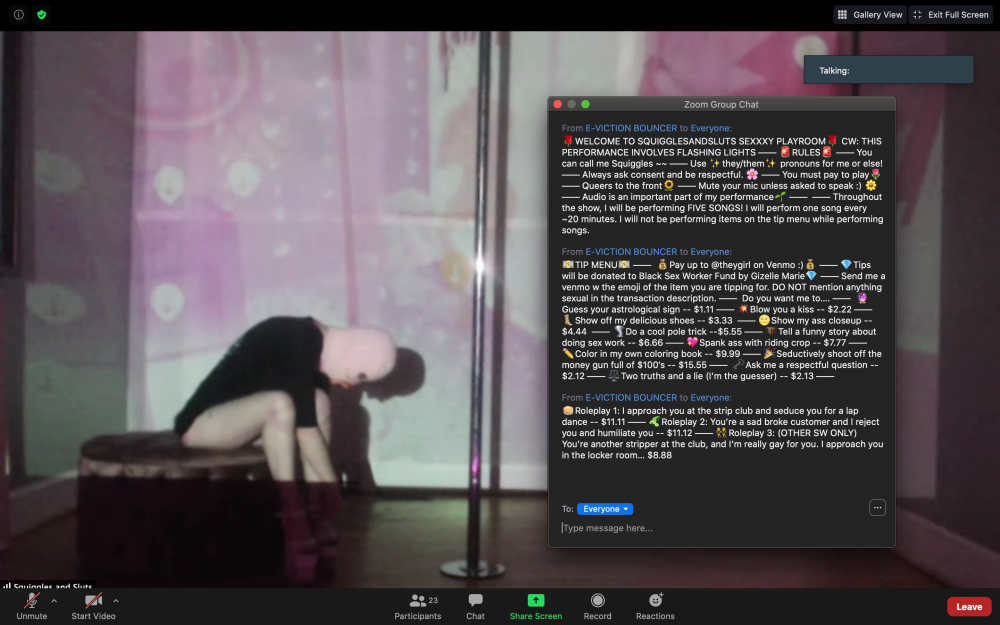
Sex work and performance as virtual resistance: in conversation with Veil Machine
My Zoom background depicted a Catholic confessional. Clad in a bra of dollar bills, I stood at the virtual pulpit, removing each dollar piece by piece, as a congregation of online audience members reported their sins via the chat window. Combining my experience as a stripper and my penchant for the unholy, this performance was one of several that made up E-Viction (2020), a “virtual arthouse/whore gallery” organized by New York City-based sex worker art collective Veil Machine. Produced through a grant from Eyebeam, the work took place entirely online through a platform mimicking the now-defunct personals section of Craigslist. Listings led audiences to…
Read More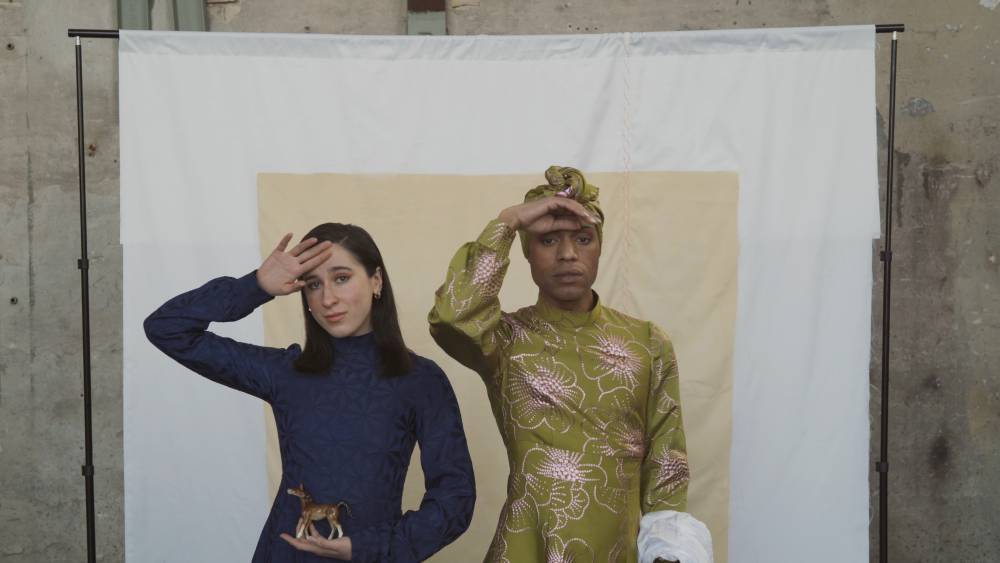
Complex machineries of ethics and desire: in conversation with Melanie Jame Wolf
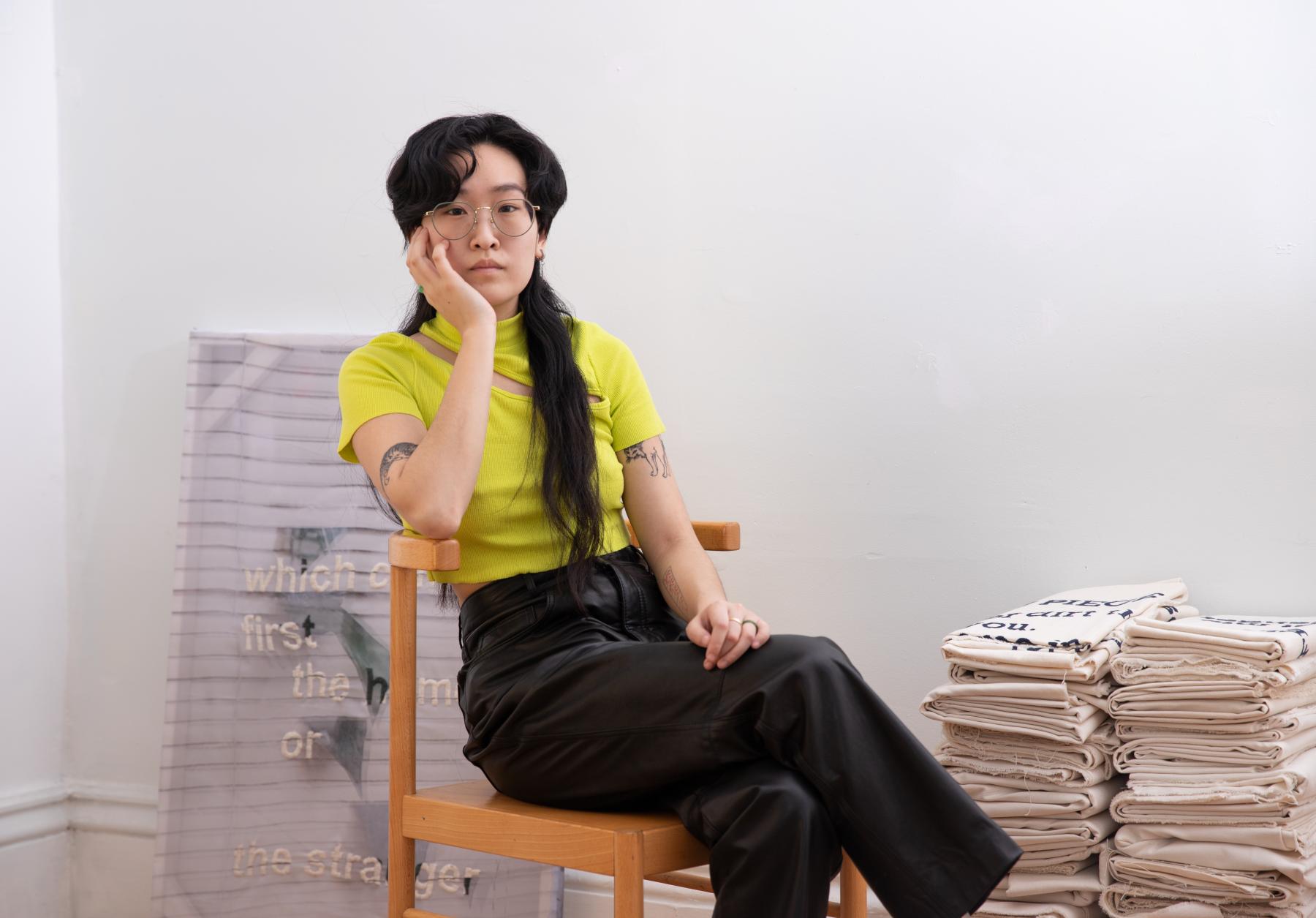
Melanie Jame Wolf is a Berlin-based artist from Naarm/Melbourne, whose practice uses moving image, textile, and sound to broadly analyze the complexities of performance as a discipline, and in everyday life. Wolf eloquently describes her concerns as being “the poetics and problematics of ghosts, class, pop, sensuality, gender, narratology, and the body as a political riddle.” In 2021 she released two new works that marked significant changes to her practice. Acts of Improbable Genius (2021) follows Pierrot the Clown and Wolf’s persona of Stand-up Ron performing the same monologue on the nature of comedy, culminating in the death of Wolf’s years-long character study of…
Read More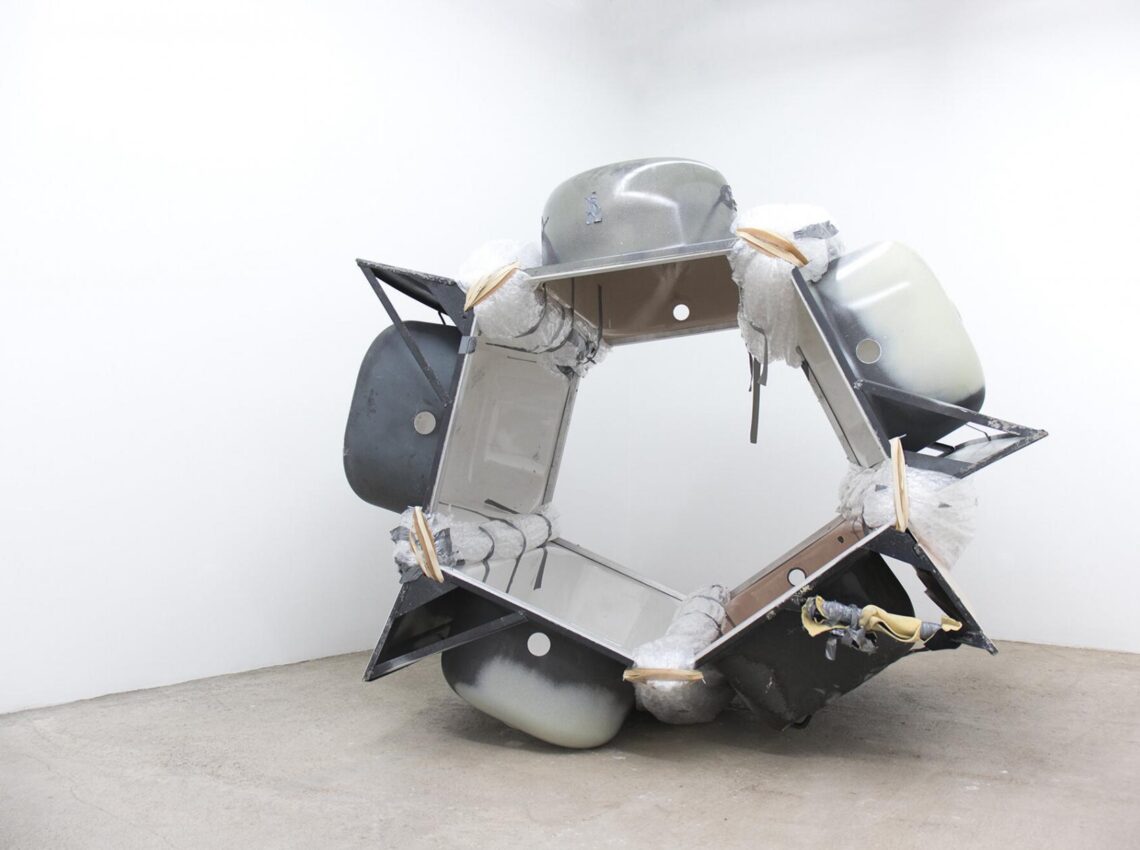
One use, over and over: in conversation with Bat-Ami Rivlin
A society that prioritizes a one-way, single-use system of consumption will, at some point, have to deal with its unsustainable methods of disposal. Instead of redefining waste or prioritizing cyclical systems of reuse, we might just come up with new names for the same systems. Some people call this green colonialism—the idea that infrastructure for renewable resources will continue to exploit and displace rural, Indigenous, and/or under-resourced communities, both at home and abroad. This translates to mercury in Indigenous waterways, hazardous waste behind Black elementary schools, and 1.07 million metric tonnes of plastic waste exported to nearly every continent on the planet. Oil…
Read More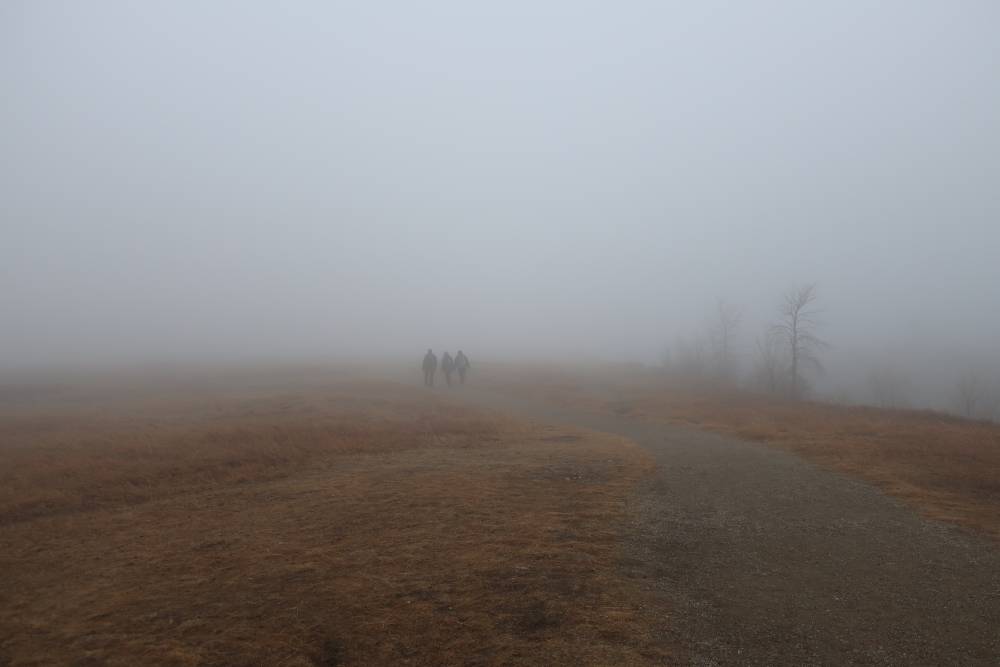
Naming home: in conversation with artist Lauren Crazybull
Lauren Crazybull and I met in the fall of 2019 on Treaty 7 territory while they were in the midst of gathering research as the province of Alberta’s first Artist in Residence. A year later, the research culminated in an exhibition, TSIMA KOHTOTSITAPIIHPA Where are you from? presented at Latitude 53 and subsequently at the Southern Alberta Art Gallery (SAAG). While working with Lauren on the SAAG iteration, I was struck by the depth of personal and historical experiences contained within Lauren’s exhibition. This multimedia project of audio, photographs, a book, and paintings culminated in an immensely thoughtful intersection of personal, cultural, geographic…
Read More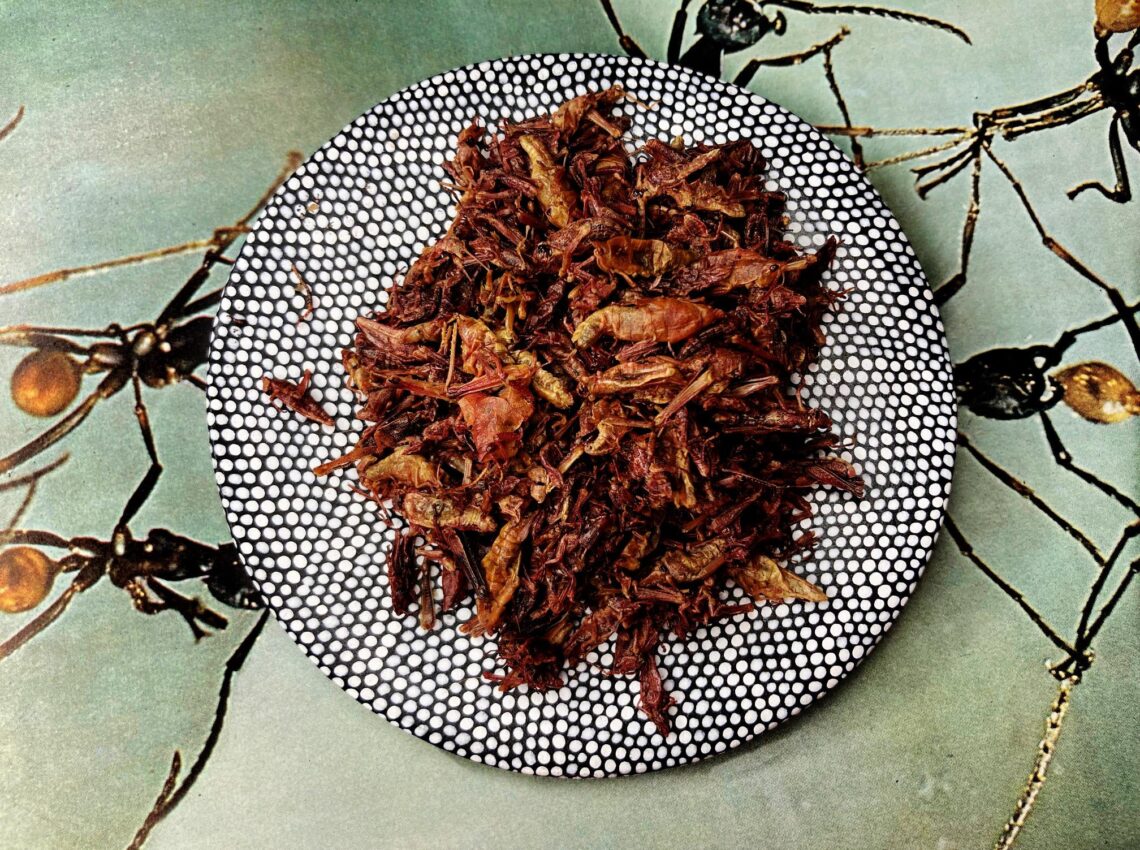
Ancestral and future foods: in conversation with Dupla Molcajete
Researcher-artists and cultural workers Beatriz Paz Jiménez and Zoë Heyn-Jones work together as Dupla Molcajete: dupla meaning duo in Spanish, and molcajete (mohl-cah-HEH-tay) referring to the Mexican mortar. From the Nahuatl word molcaxitl (molli = sauce and caxitl = cup or bowl), this prehispanic utensil, usually made from volcanic stone or clay, is used to grind spices and other ingredients, and often to make sauces that are served directly in the mortar itself. The molcajete is a strong and beautiful tool, both ancient and contemporary, made from both the earth and from human labour. It is an everyday domestic artifact, feminized and containing within it great strength and power. It is…
Read More