




Area Of Intrigue

The Republic of Apology
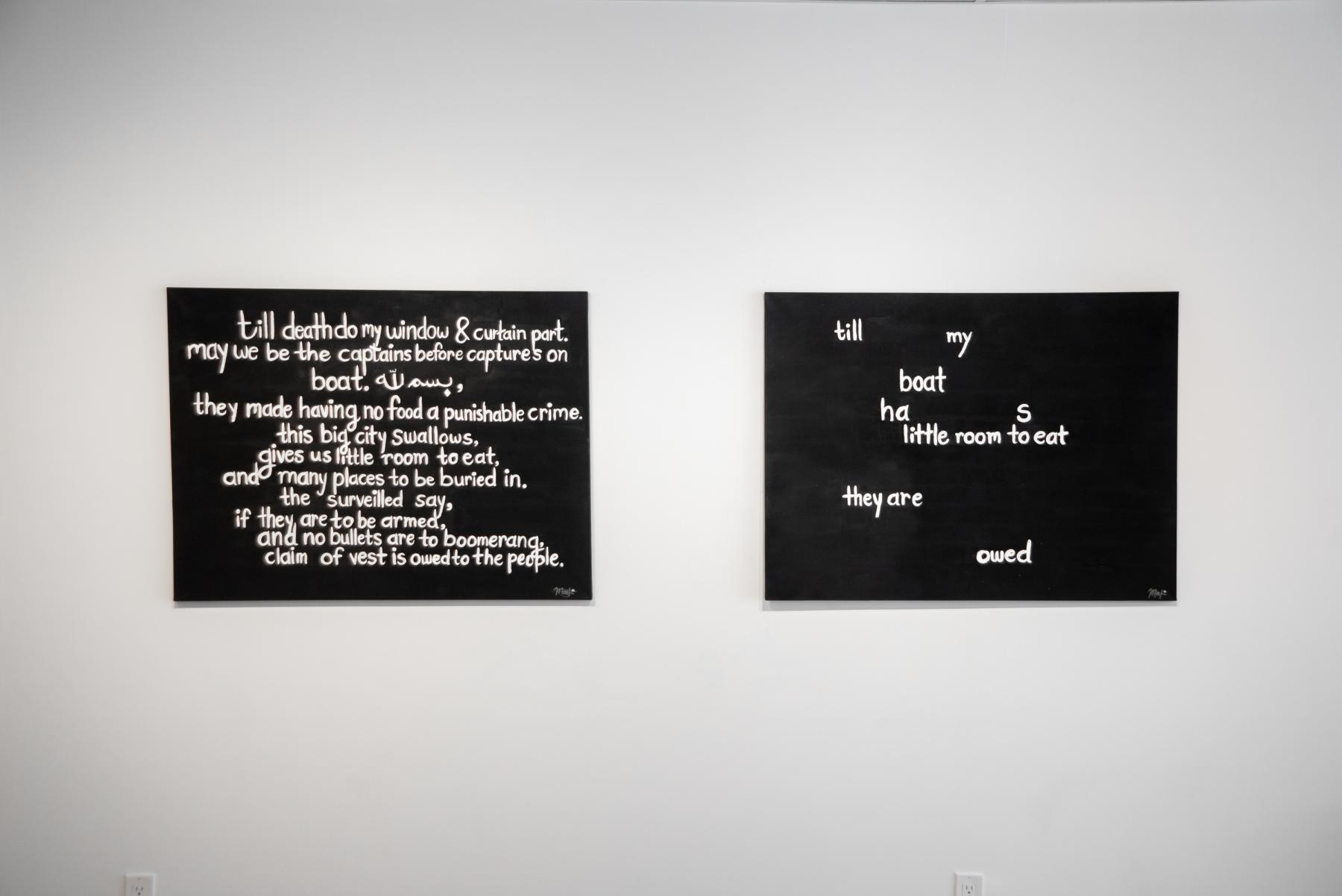
In the Republic of Apology sorry can buy you anything. Can pay for anything. Those were the opening lines of your book on apology. When your editor Zach first read it, he said that etymologically-speaking “sorry” and “apology” were not neighbours. Apology was a statement of excuse, something put up in defence against accusations. That was how ancient Greeks understood it. Sorry, on the other hand, came from Middle English and expressed sympathy and a feeling of soreness or sorrowfulness. The operational form of the contemporary regime of apology, said Zach, had returned to the original meaning of the word. There wasn’t…
Read More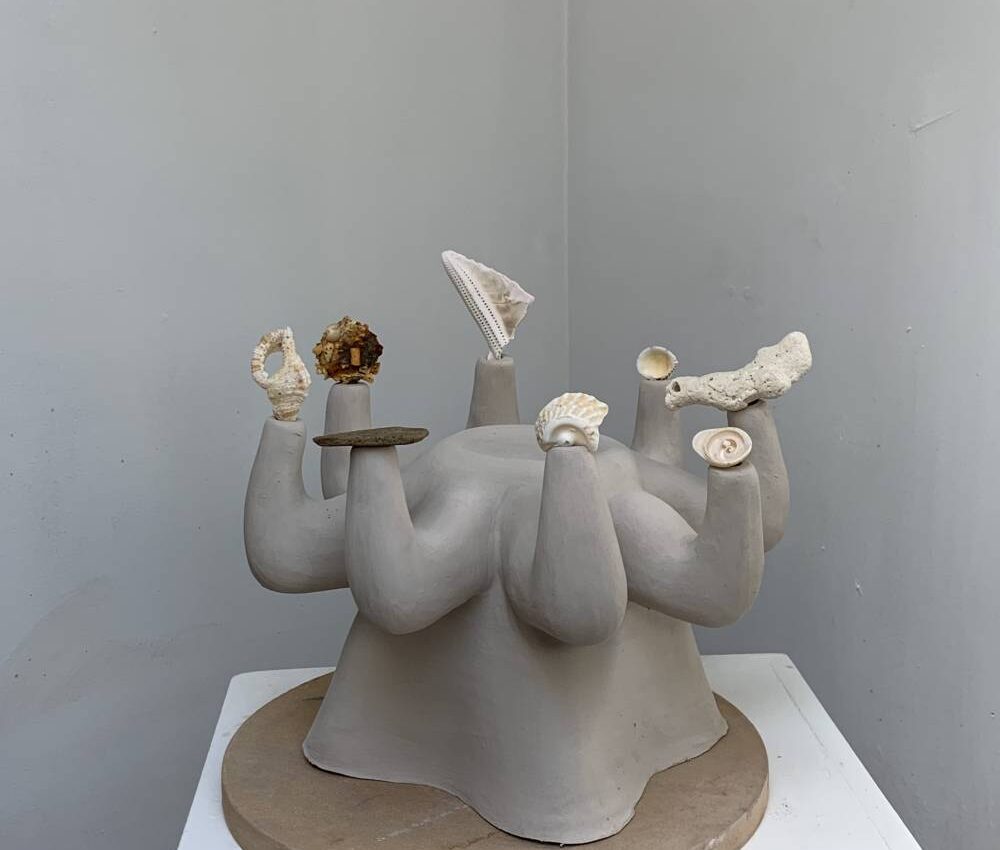
Methods of Holding Complexity and Community
In The Carrier Bag Theory of Fiction, Ursula K. Le Guin unravels the belief of the spear as the earliest human tool. She writes: “[S]ixty-five to eighty percent of what human beings ate in [temperate and tropical] regions in Paleolithic, Neolithic, and prehistoric times was gathered; only in the extreme Arctic was meat the staple food.” The overrepresentation of the spear conveys the conflict-driven narrative of the hunter as hero. She de-centers the spear and re-centers that which holds: the carrier bag, the basket, the pouch, the stomach. A modality is expressed, one that better reflects Le Guin as a person…
Read More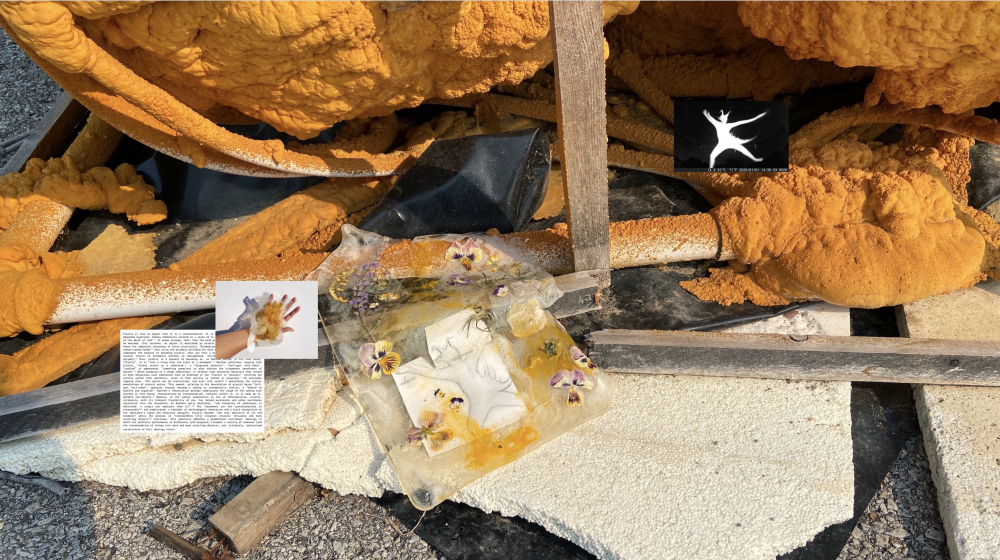
Aspic Sculpture IV: Material Poetics
As a dish, the aspic’s practical development has passed through a dizzying range of material interests—aristocracy to royalty to industry to austerity to a kind of uncanny normalcy. All throughout, though, save a few modifications, the aspic’s function has remained consistent: ensconce, maintain, protect, and preserve. Across its many aesthetic manifestations, its migration across social classes, and its distinct pragmatic functions, the aspic’s very materiality has always been silently undergirded with a material poetics of its own. Though it’s rarely acknowledged by the able-bodied, collagen, from which gelatin derives, is not a neutral substance to mammalian bodies, standing as one…
Read More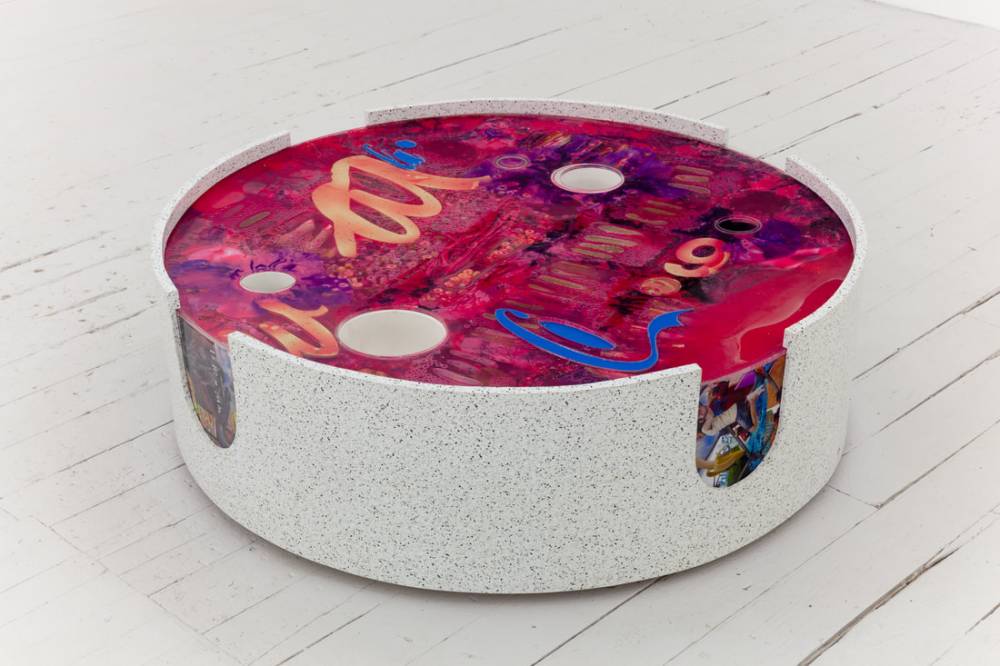
Aspic Sculpture III : Testbeds of Capitalist Erosion
If Kevin Beasley’s sculptures from A view of a Landscape were largely concerned with countenancing historical narratives, reframing atavistic patterns from the 18th and 19th centuries to emphasize how they remain in place centuries on, Canadian sculptor Catherine Telford-Keogh’s work in the aspic genre reflects squarely on the perversities of contemporary, late-stage capitalism. And if the last essay explored Beasley’s symbolic suspension of exploitation, erasure, and decay, the works I’ll discuss here approach the crumbling worlds of contemporary capitalism by leaning into the encroachment of precarity or decay. Telford-Keogh’s work is largely defined by a flailing sculptural mode similar to those we’ve seen so…
Read More
Aspic Sculpture II : Exploitation, Erasure, and Decay
The first patent for gelatin production was issued in 1754, but gelatin’s industrial production began with the Napoleonic wars at the beginning of the 19th century. With their ports blocked by English fleets, unable to receive properly varied food shipments, French scientists experimented with gelatin as a protein substitute. As we’ll see, this predilection to compensate for austere material conditions repeats as a pattern throughout the aspic’s history. Gelatin plants at this time were a second-order industry, often reliant on the scraps from other factories and processors that worked with animal bones, as well as butchers. While elaborate, molded aspics and…
Read More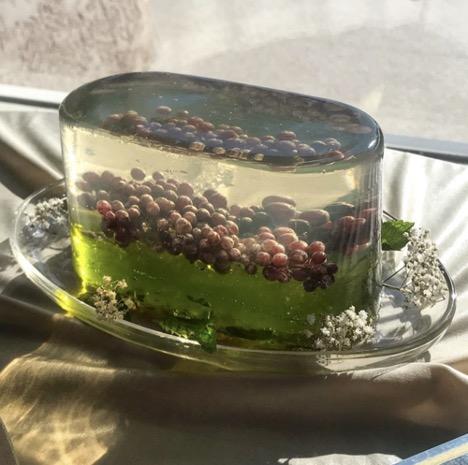
Aspic Sculpture I : an introduction to the “aspic genre”
“Always historicize!” Fredric Jameson, The Political Unconscious Carrot, fish, walnuts, lettuce, pepper, shrimp, onion, egg, cucumber, celery, tomato, chicken, ginger, olive, gelatine. List of ingredients in aspic recipe Many no longer know them by name, but most of us are familiar with aspics in one way or another. Depending on the era of reference, you may have seen them skulking at dinner parties, or been fed them as a reluctant child; marvelled or puzzled at their gaudy appearance in films and magazines, or delighted or recoiled at their inscrutable ingredients listed in mid-century cookbooks. Their material form is perhaps the…
Read More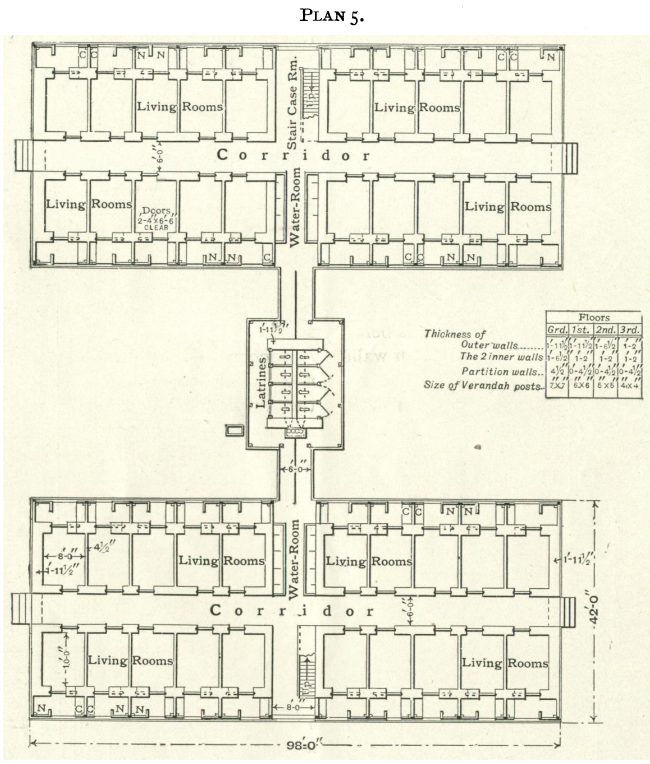
Ruminations on a cultural mosaic of light, space and spice
One of my earliest memories of food preparation is of watching my grandfather sitting on a teal accent stool grinding masala on the gaatno1. Walking on the red terrazzo tiles of my grandparents’ kitchen, the hypnotic circular rhythm of the grey grinding stone only paused when he would gently direct the masala with his fingers. Pieces of coconut, dried red chilies, tamarind, and powdered spices were constantly moved, till a fine paste was obtained. In 2019, as I pondered on the reasons for my grandparents’ migration from South Kanara to Bombay, my wife and I reached the final phase of our…
Read More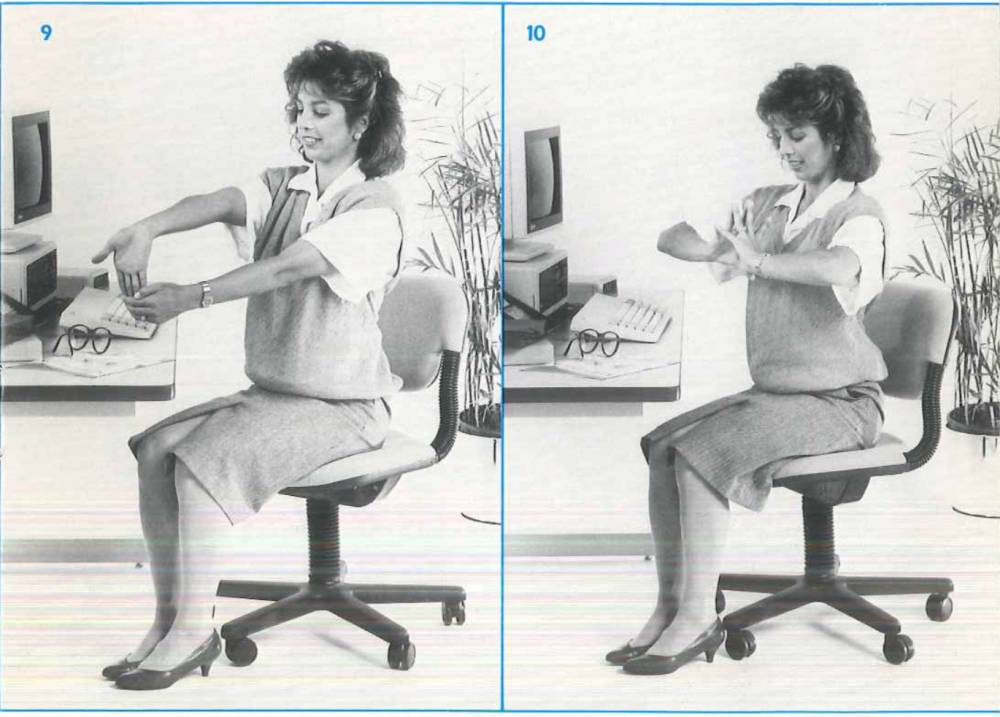
Labouring to keep the body fit for labour
Inevitably distracted from the writing task at hand by the tension in my neck, I find myself in a new tab where the phrase “Why is the Aeron chair so expensive?” auto-completes in my search engine. My resentment towards the obligation to work beyond the limitations of my bodily capacity is directed at this object: a top-of-the-line office chair designed by Herman Miller, wrapped up in the legacies of Modernist design and “human factors engineering.” The chair’s glistening curvature promises to cradle one’s wrist, delivering it to the keyboard at an angle so comfortable, one could type forever. It takes…
Read More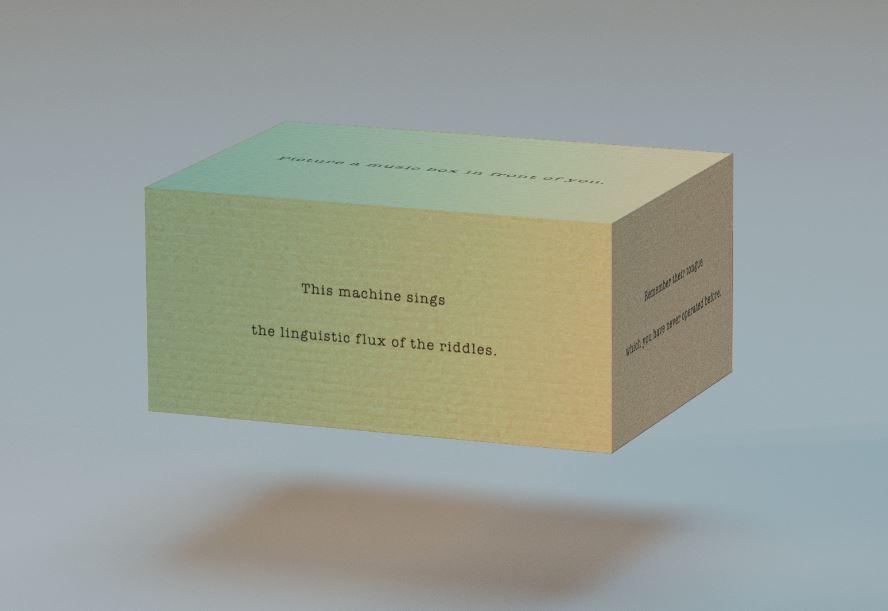
Sugar Cube
It was his routine to dissolve a distinctively large sugar cube in his morning coffee. Nothing else. Only routine. This morning, too, he picked one up. As he was about to put it in his mug, he somehow felt this particular cube was more solid than usual between his two fingers. But his focus shifted to the dominant sound in his room: the voice of a CBC Radio reporter creeping up from his phone. Her announcement of an incoming storm was audible, yet it did not get through to him. “What if she were warning me in Korean?” he asked…
Read More
Antagonizing Cottagecore: nature as imperialist America’s femme fatale
After Taylor Swift’s album Folklore premiered—an album whose associated videos and imagery are rife with idealized isolation—W Magazine ran an article titled “Taylor Swift Has Discovered Cottagecore.” This headline doubly reiterates the relationship between postcolonial America and the natural world: it celebrates a white woman “discovering” an aesthetic trend that already celebrates the myth of discovery. Cottagecore’s linen, lace, and pleated cotton skirts return to Victorian England, or 17th and 18th century colonial America—periods of imperialism, in which culture was synonymous with hegemony. Across platforms (Instagram, Twitter, Tumblr, Pinterest), cottagecore is an online community formed around the antithesis to community: isolation. As a pop singer-songwriter,…
Read More