

Archive
A Window Sound
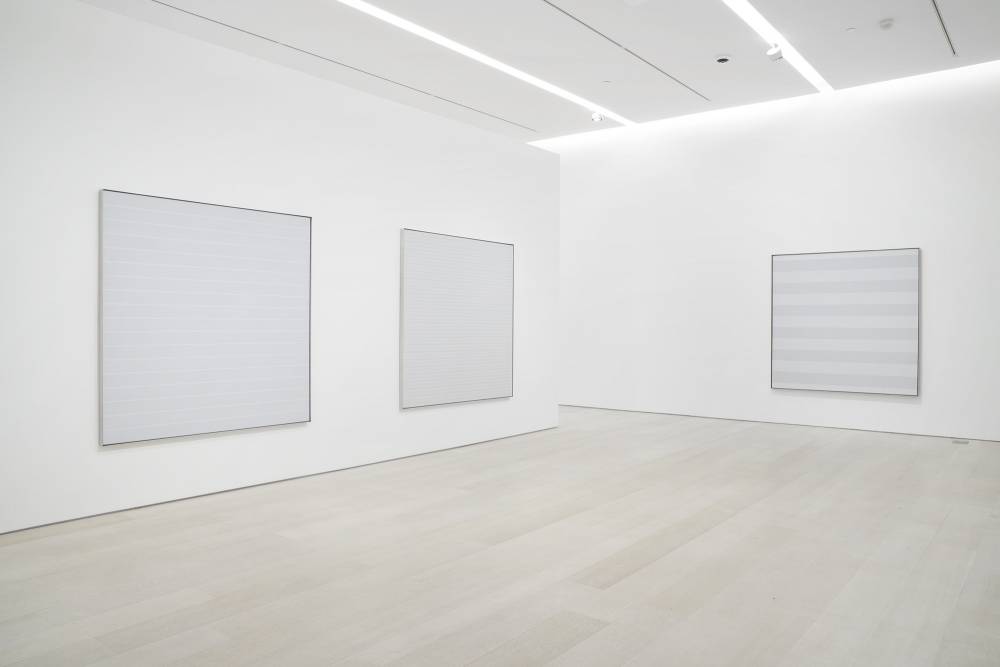
like white paintings, and this gives me anxiety. Kazimir Malevich. Robert Ryman. Michael Buthe. These makers of white paintings are synonymous with high art made by white men in the tradition of minimalism that has come to be regarded as pretentious, elitist, and transcendent. What does it mean for a racialized queer woman like me to like white paintings? I was recently reading the poet Kazim Ali’s new and selected works, Sukun, and was relieved to find that he too likes white paintings, specifically those by Agnes Martin, the Saskatchewan-born, Vancouver-raised, America-educated artist known for her “grids” – large square-shaped canvases primarily…
Read More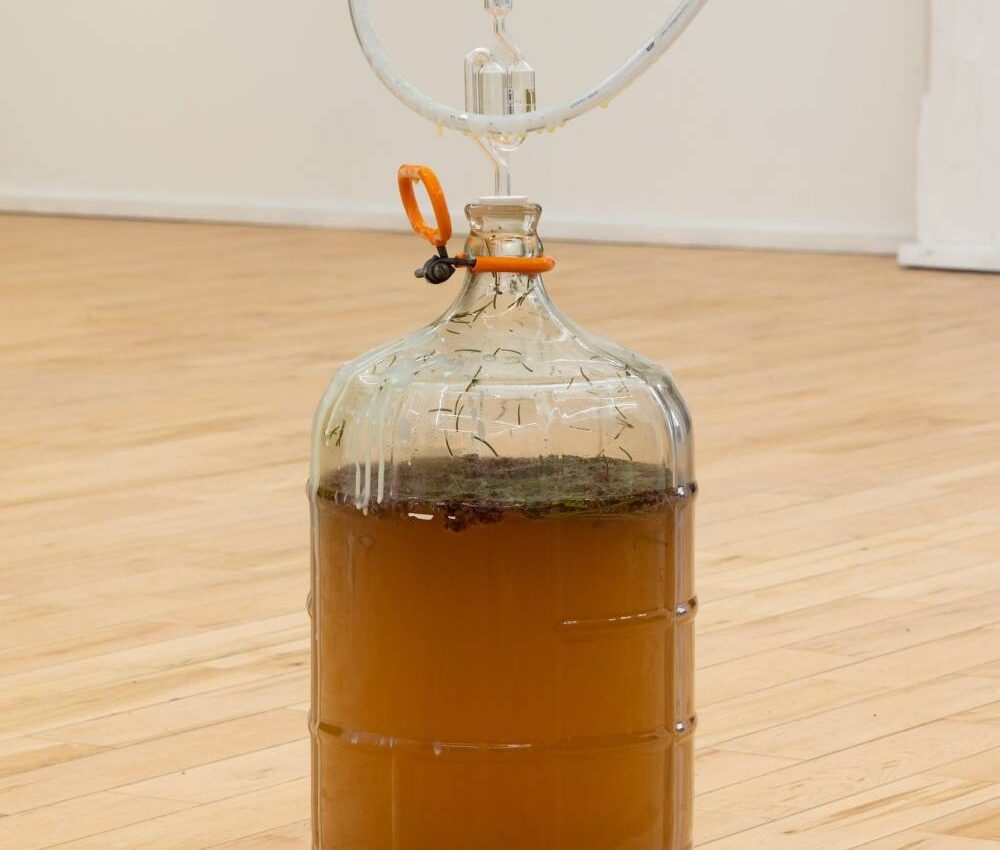
Metabolizing our way through: in conversation with artist Maria Simmons
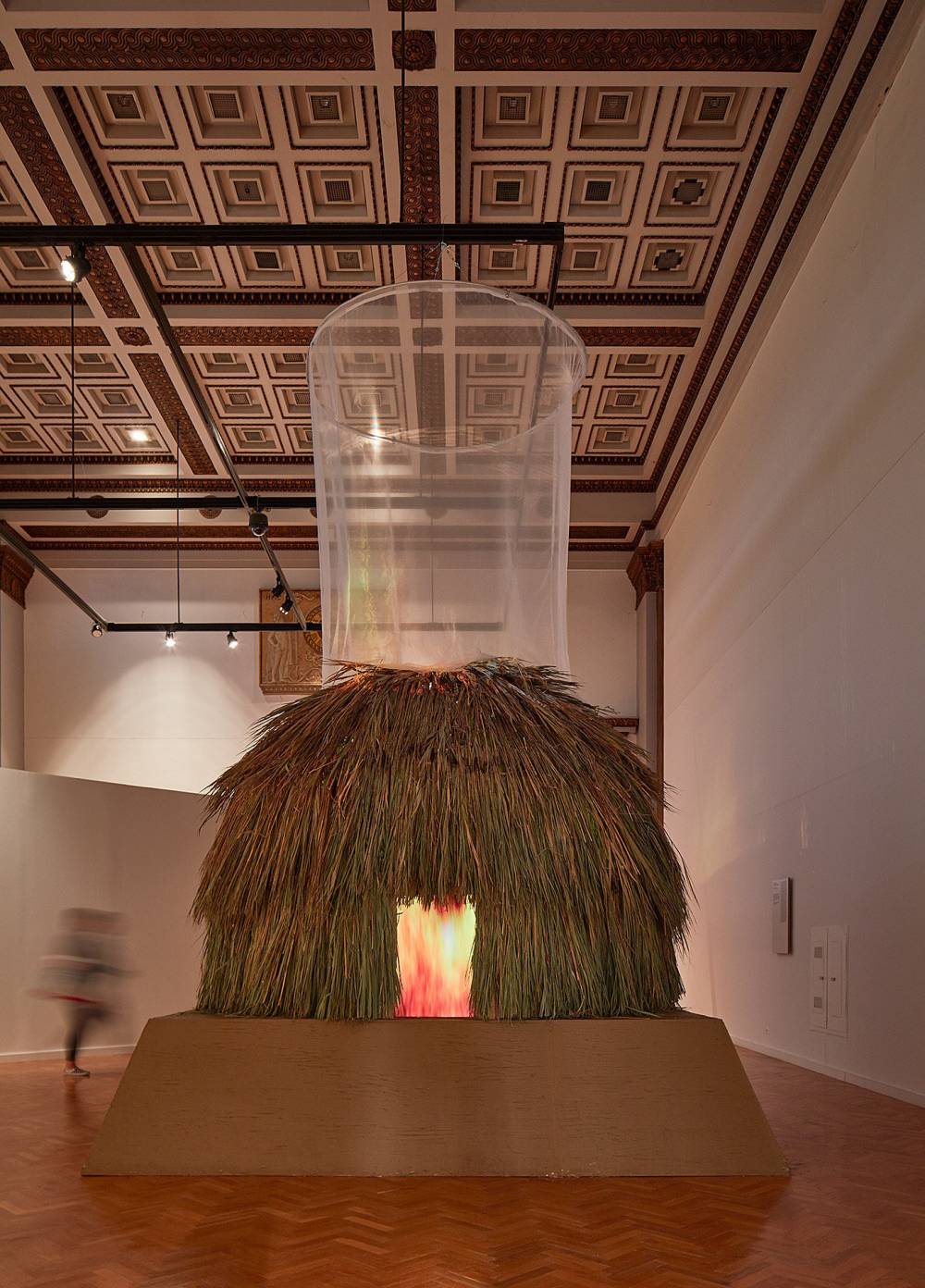
A milky, earthy aftertaste lingers in my mouth. An egg-sized lump of fresh butter sits in the palm of my hand, roughly enveloped in bark and moss and zealously held together by twine. My bundle is ready to be buried in the mire. Hamilton-based artist and curator Maria Simmons creates and nurtures sculptural installations that function as living ecosystems unto themselves. Last January, we had a chance to reconnect during a bog butter workshop and tasting, which Simmons hosted as part of a series of food-based artistic interventions presented by the Creative Food Research Collaboratory. Gathered around simple foods —…
Read More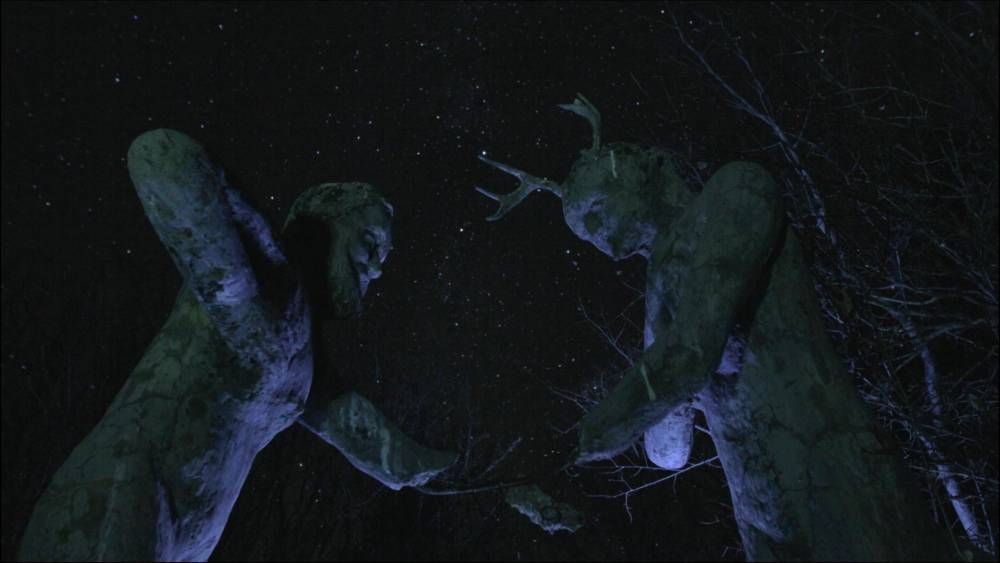
Microbial Soup
Preservation has two meanings: keeping something of value intact, protected, and free from decay, or, alternatively, preparing food for future use by preventing spoiling. To preserve ideas, things, and places is to slow the passing of time to maintain their original state. Preserving food, however, is to transform it. For example, through fermentation, food can be preserved via a metabolic process that generates new products from sugars through the absence of oxygen and the introduction of microbes. Static or active: to embalm or to pickle. The act of preserving spaces and objects is historically that of the embalmer, but, in…
Read More
“We’re always making the space that we’re in”: in conversation with author Owen Toews
Owen Toews’s debut novel Island Falls (2023) is hard to describe. Half tale of unfolding friendship, half clinical report of a segregated mill town in the Canadian prairies, the enigmatic text plays with genre and form, raising questions about how space is produced and contested. The result is both charming and unsettling. Characters wrestle with how to respond to the violent structures that surround them and never really figure it out. In the end, we’re left to ponder the thorny relationship between trying to make sense of things and actually creating something better. Overall, the effect is galvanizing. Toews invites the reader to…
Read More
The Value is in the Loudness
I “What makes Nigerians tick?” I was asked recently by one of those folks, you know, who by hook or crook would be found asking Africans here where they really are from. On a blessed day, I would’ve ignored the question, pretended I didn’t hear the blasphemy, or, even better, offered a not-so-polite dressing down. It’s frustrating to be constantly harassed with antiquated, racist questions: where are you from?, what makes your people unique?, how do you greet in your language? Questions that many of us know to be loaded with intents and mal intents to put us where we are perceived to belong. Elsewhere, anywhere…
Read More
An unknown number of stories: Amy Ching-Yan Lam’s art and writing practices
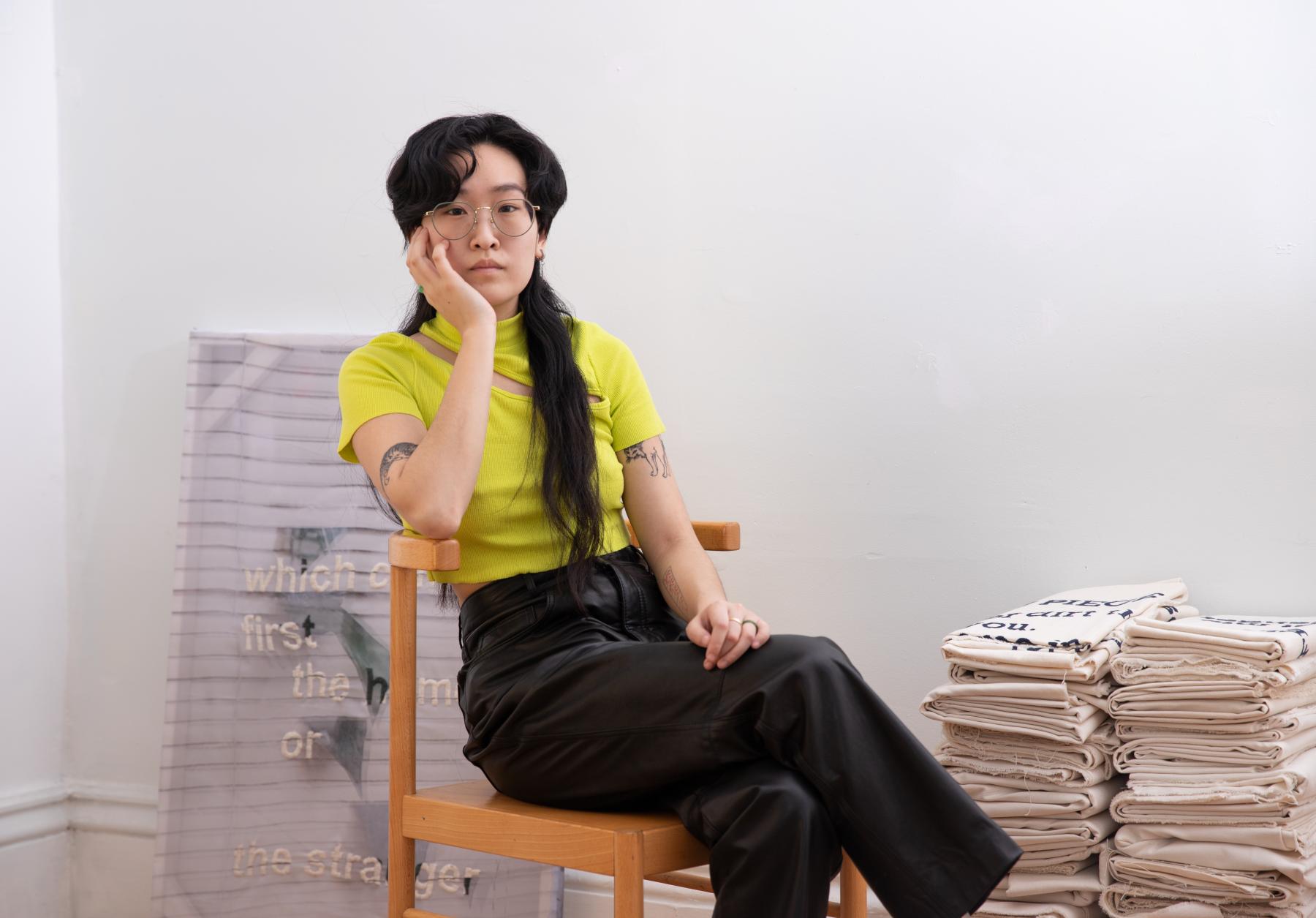
Amy Ching-Yan Lam and I look over the menus at a packed cha chaan teng (Hong Kong-style diner) in Markham, a suburb of Toronto. In the background are sounds of clattering dishware and Cantonese conversations. People are crowded into the small entryway as they eagerly await a table, glancing at diners who might be finishing up their meals. The energy in here is frenetic, but not unpleasant. Lam speaks Cantonese. I don’t. In this setting, the language conveys ease and maybe belonging, but is not required for ordering our midday meal. Descriptions of the dishes are written in Traditional Chinese…
Read More
Mycelial without meaning to
Fungi are everywhere. I’m not the first to say it, but I want to be the last. In February, Triple Canopy published a series of essays surveying the ongoing proliferation of fungi-inspired culture. Mushrooms, with their pleasing color palettes and subtly salacious shapes, have been made into plushie toys, decorative patterns for dish towels and puzzles, and vibey graphic tees. Mushrooms, specifically the reproductive fruiting bodies of fungi that we can see protruding from soil or downed trees, are predictably easy to aestheticize. There are other parts such as mycelium that are aestheticized too but in different ways. These fine fungal threads are similar to roots…
Read More
“I want to interrogate the discomfort I have around being a painter”: in conversation with artist M.E. Sparks
M.E. Sparks is an artist and educator based in Winnipeg, Manitoba, Treaty 1 Territory. Born in Kenora, Ontario, Sparks completed her MFA from Emily Carr University and her BFA from NSCAD University. She has received numerous awards and grants for her work from the Canada Council for the Arts and the BC Arts Council, among others, has been involved in several international residency programs, and has exhibited internationally. Sparks’s practice is deeply rooted in the history of painting. As an art historian, I was eager to speak to her about her influences and how the past continues to inform the…
Read More
Convivialities
n a recent article for Airmail Magazine, a U.S.-based online lifestyle publication, the artist Laila Gohar presented her formula for hosting the perfect party. It included, in random order: Laillier Blanc des Blancs champagne (“holiday water”), crystal cups (“so wide that almost seem like swimming pools”), cotton-linen tablecloths (“elegant yet not too uptight!”), and mother-of-pearl spoons (“perfect for caviar, but also for ice cream or sorbet”). In Gohar’s opinion, these chiselled details aim to create an atmosphere “relaxed yet considered, easygoing but layered.”1 I would be lying if I said that I’m not mesmerized by the atmosphere Gohar depicts, flawlessly…
Read More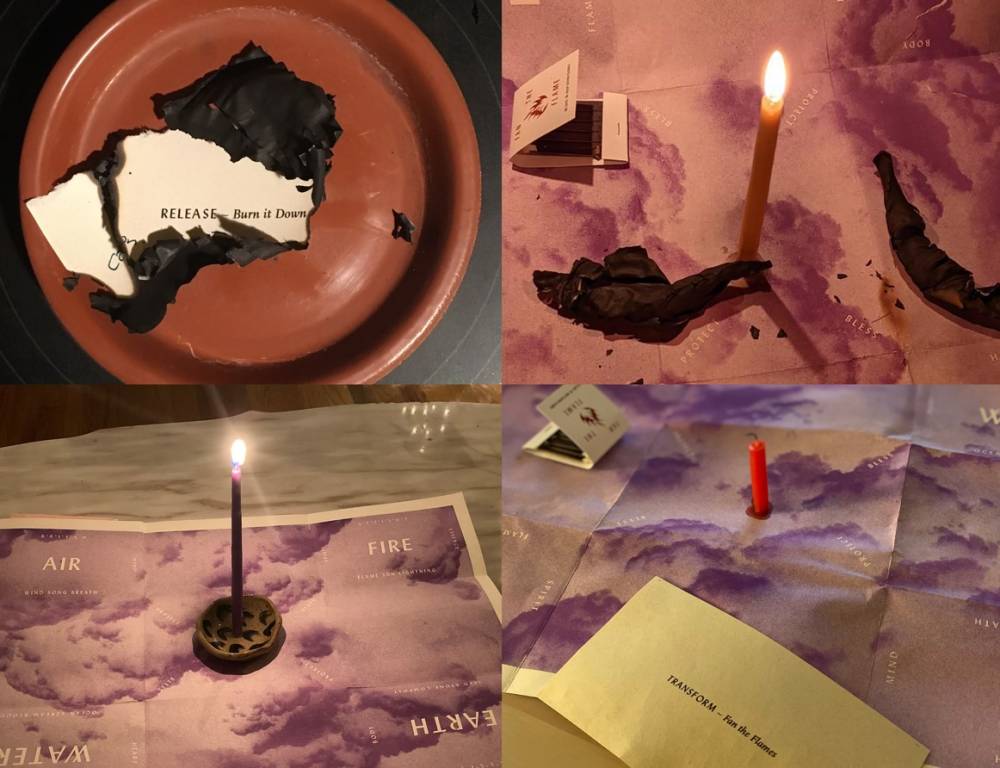
A Time of Returning and No Return: in conversation with Indu Vashist, Cecilia Berkovic and Amy Fung
In response to the Spring Equinox, Public Parking Editorial Resident Amy Fung invited multidisciplinary cultural workers Indu Vashist and Cecilia Berkovic to engage in a mindful and honest conversation on themes of cycles, practice, violence, and endurance to mark this year’s Summer Solstice. Meeting and working in the Toronto arts scene in the 2010s, Berkovic, Fung, and Vashist reflect on the present era of what it means to be alive. Amy Fung (Amy): Let’s start at the beginning. Ceci, Indu, how do we know each other? Cecilia Berkovic (Ceci): Well Amy, I met you through Images [Festival] when I worked there…
Read More