

Archive
An Imaginary Grid: in conversation with Elizabeth M. Webb
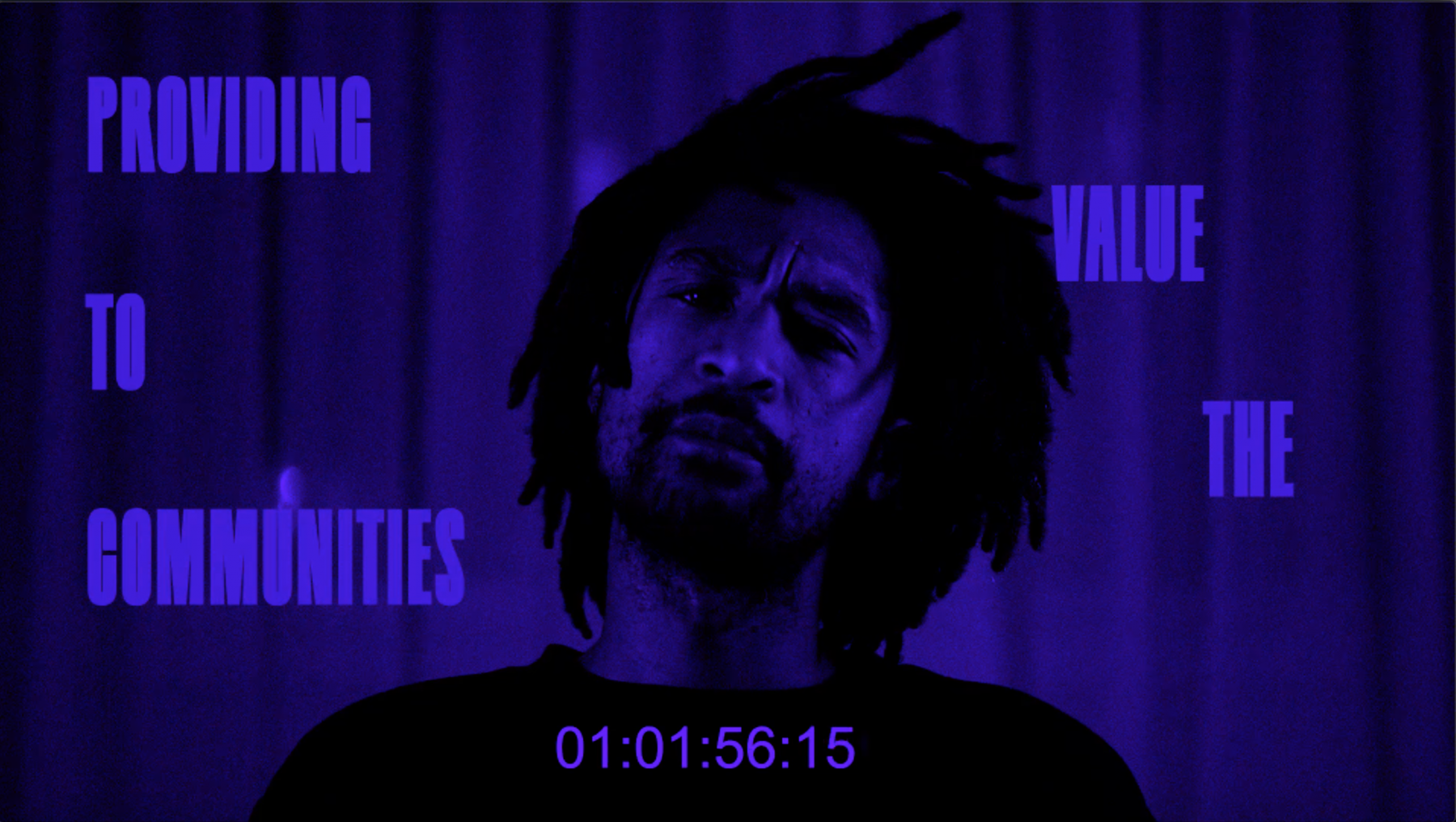
Elizabeth M. Webb is an artist and filmmaker whose material practice is entwined with experimental research. These two aspects of her work are inlaid, as it is nearly impossible to speak about one without the other. Originally from Charlottesville, Virginia, Elizabeth’s family history is embedded in her work, in particular its oscillating histories of racial passing throughout the United States. The artist often considers her own experience, and that of her family’s, as a way of examining broader social structures, and how those structures are at odds with lived realities. Her research process acknowledges these limits, her questions leading her…
Read More
Holding the Devil’s Hand
Black Diamond is a small town located forty-five minutes south of Calgary. In a mutual decision by local councils to prioritize “cost savings,” it was recently merged with the nearby town of Turner Valley, Alberta, and the area comprising the two has, as of January 1, 2023, gone by the name Diamond Valley (clever!). We must not forget that these are all colonizer names—although youthful, punkish me had a fantasy that Black Diamond was named for the KISS/Replacements song, and not for the prevalence of coal in the area. The actual, earthy land of Diamond Valley ripples off to the east, shaking…
Read More
Installation Art is for Lovers
Late one early-autumn night, I crawled through the narrow tunnel of a plastic Klein bottle constructed on my college campus. The 3D equivalent of a Möbius Strip, the bottle was a skeleton of flexible PVC pipes and a skin of clear plastic stitched to it with white twine. To guard against mild winds, the bottle was staked to the ground and pulled taut, tied to the bare branches of the trees above. My crush crawled through first, and I followed into the wide arched belly of the bottle. We lay side by side talking for hours, shielded from the light…
Read More
Toward a future to hold on to
“What art might offer is always modest on its own, and, from one angle, art has never looked smaller. But from another angle, in the right conditions, it might offer something close to an actual survival skill.” — Ben Davis, Art in the After-Culture: Capitalist Crisis & Cultural Strategy I. Critic Ben Davis offered this concluding thought in his new collection of essays, Art in the After-Culture. His was the final book I would read in 2022, and these words seem an appropriate summation for a time in which writing about art feels both absolutely urgent and entirely inconsequential. Art’s “smallness” becomes…
Read More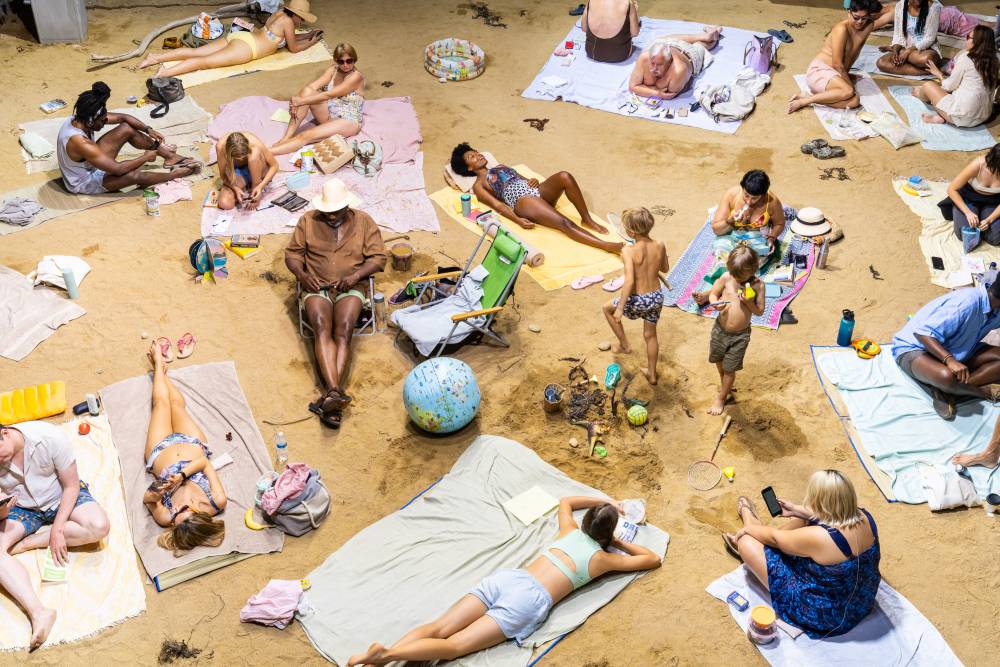
Sun & Sea: Epic Theatre in the Sand
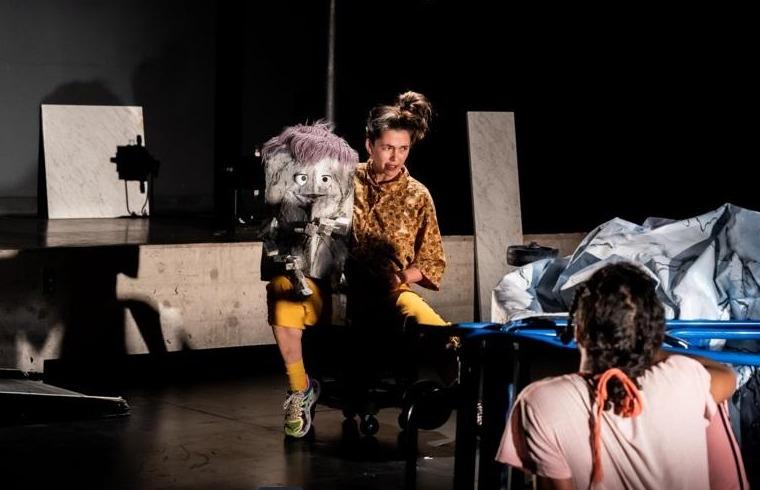
Three years after its Golden Lion win at the 2019 Venice Biennale, Sun & Sea arrived in London. The Lithuanian performance on climate change was brought to the British capital as a collaboration between We Are Lewisham Borough of Culture 2022, London’s International Festival of Theatre (LIFT) 2022, and the Serpentine Gallery’s Back to Earth programme on the climate emergency. This multitude of producers from all corners of the London cultural sphere begged the question: “what exactly is it?”, as many people enquired when I mentioned my summer evening outing. In each context, it became a different art form. Was it a public community event for Lewisham…
Read More
How to Stop Yawning
I began to adopt the practice of concealing my chronic pain1 almost immediately after it began over 13 years ago. I have set rules for myself: not to vocalize my pain, not to let people see it on my face or in my body language. Though I am slowly growing more comfortable disclosing the fact of its existence, I continue to contain my sensations and the realities of my embodiment. I fear that expressing my pain will make people uncomfortable. I fear that it may invite expressions of pity, or admiration for my resilience. Even worse, I fear unsolicited advice and suspicions…
Read More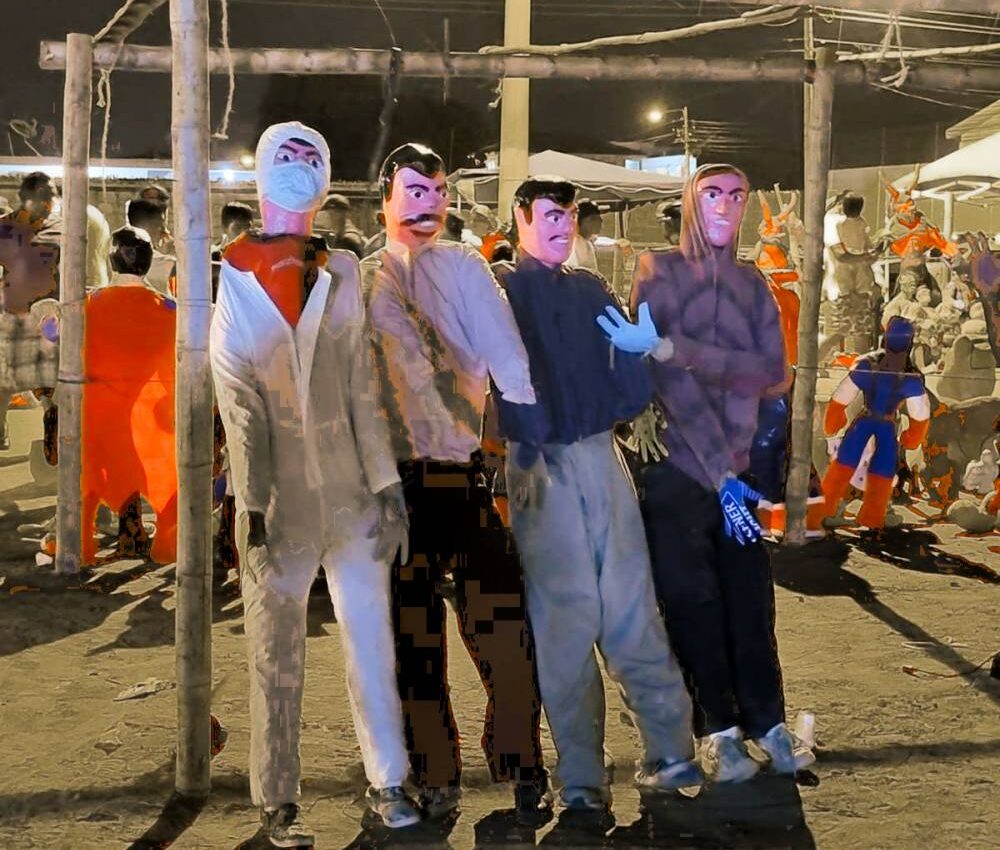
Burning the Old Year
I. Every year on the first midnight of January, Ecuador celebrates La Quema del Año Viejo (the burning of the old year). My father used to build our family’s monigote — also referred to as the “old man” — using his old clothes. At the waist, he would stitch a shirt and a pair of pants together. Later, he would fill it with sawdust and old newspapers. He would then close the legs and arms with stitches. We would purchase a prefabricated paper mache head with a painted face of an “old man” as the finishing touch. We would bring our monigote to the middle of the street, where…
Read More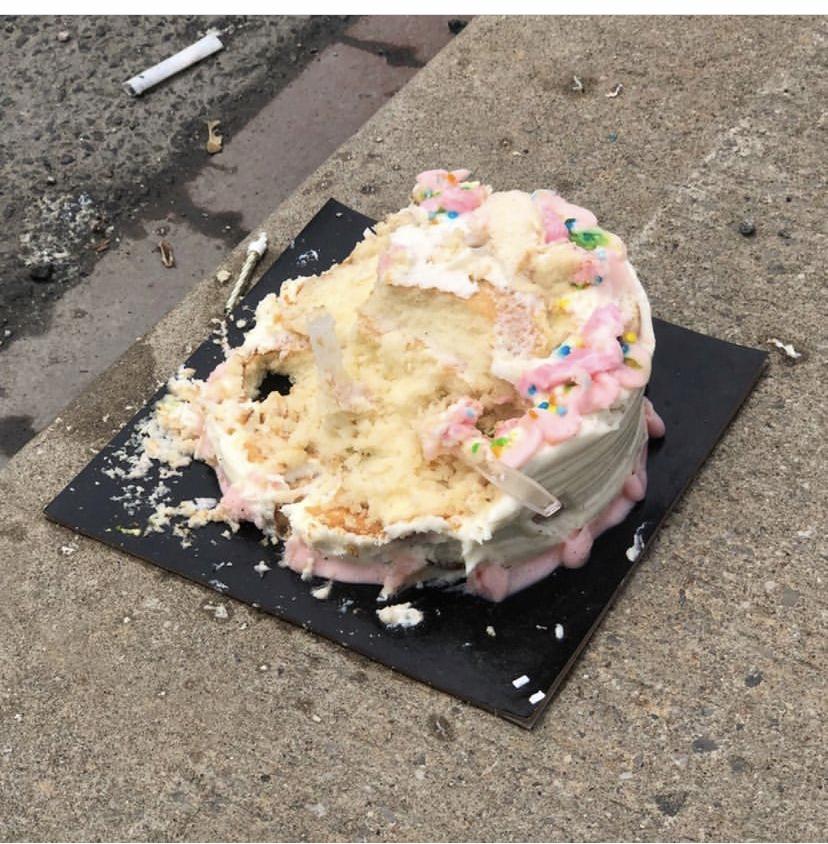
A Year in Charismatic Trash
Come for the trash, stay for the culture – @fucknomtl There’s an ingenious profile of artist David Salle written by Janet Malcolm titled “Forty-one False Starts”, and composed of forty-one distinct ledes introducing the subject from a different angle. I’ve been thinking of this essay throughout my frustration with starting this piece, which has amassed a sizable pile of discarded introductions in an attempt to express the spirit of the past year. As it turns out, locking atmospheric social tides into language is a slippery business, and so after several false starts, I find myself distracted in my inbox. A Substack I…
Read More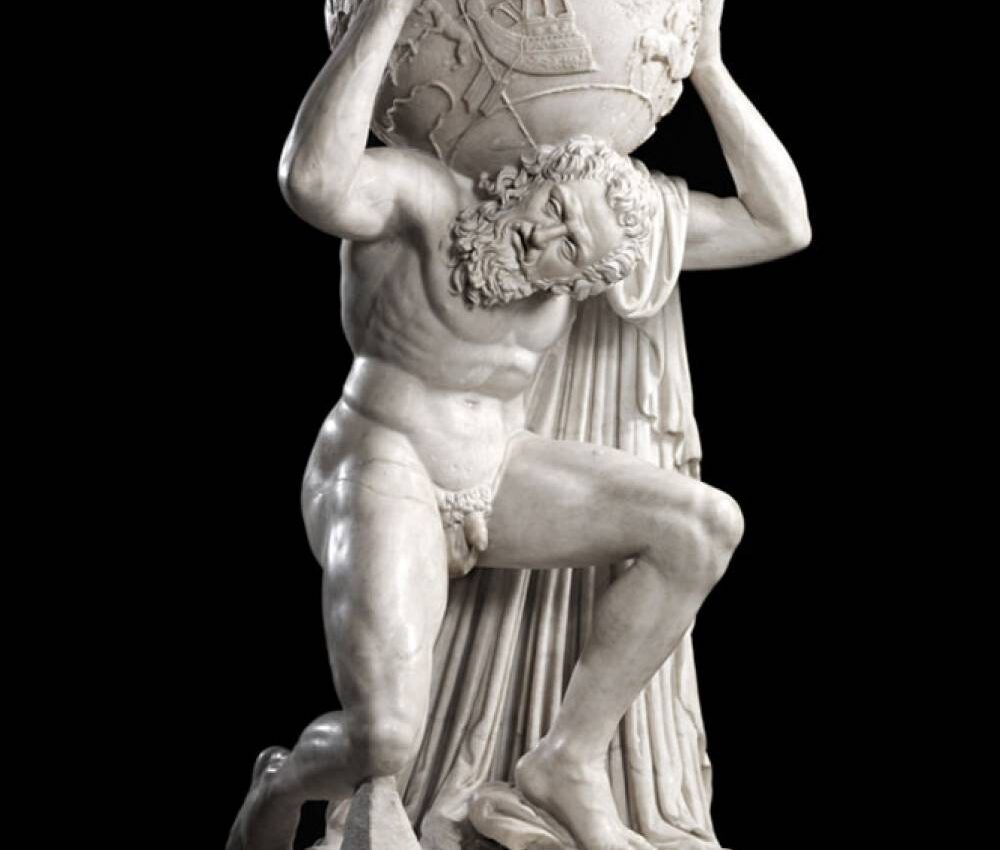
Atlas as Process
Cosmos At last… The classical figure of Atlas—let’s take the Farnese Atlas as our oldest extant example—holds on his back the world in the shape of a celestial globe, a readable image of the heavens. If we were to circle this sculpture in three-dimensional space, we would count 41 constellations from ancient Greece: illustrations of star patterns whose forms have persevered to this day. Atlas’s spine is contorted and his muscles bulge; I witness his neck bowed and tug instinctually at my own shoulders, stiff in sympathetic reciprocity. It’s not that the sky is that heavy. Rather, Atlas only knows the sky as…
Read More
Africanist Autoethnography: same old bad joke
I “Bros, are you following this nonsense? I’m incensed, man! On days like this, I just wish I didn’t sign up to be a professor in the humanities or in the US. Our people sell us short.” So read the text message from my friend TJ. By “this nonsense” TJ was referring to an academic journal article—published by the African Studies Review—by two white women and the resulting social media furore about it and the responses of some African academic peers who were on social media defending the women’s right to free speech. “You take these things too seriously” was my…
Read More