

Archive
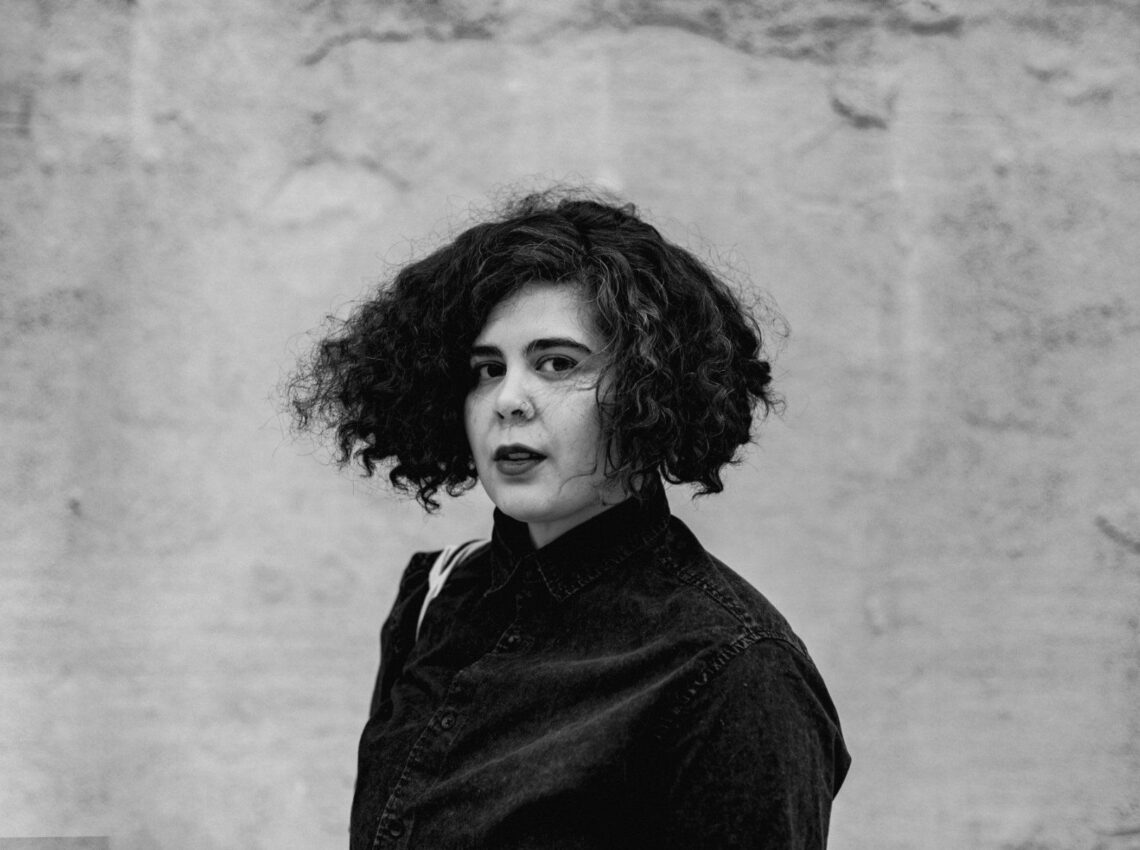
The Voice, The Self, and The Symptom: in conversation with author Lara Mimosa Montes
The nameless narrator of Lara Mimosa Montes’s new book, The Time of the Novel (Wendy’s Subway, 2025), makes a plain confession. “I was over being a person, one with a social security number, a natal chart, an undecided future, and a passport.” It’s an absurd thing to desire, and completely relatable. It should seem absurd that so much of what distinguishes a person as such is fundamentally impersonal: someone’s birth time and place, a set of randomized numbers, government-issued papers—stuff that’s all too easy to forget or misplace. Yet, the stakes of having or not having these materials couldn’t be higher as…
Read More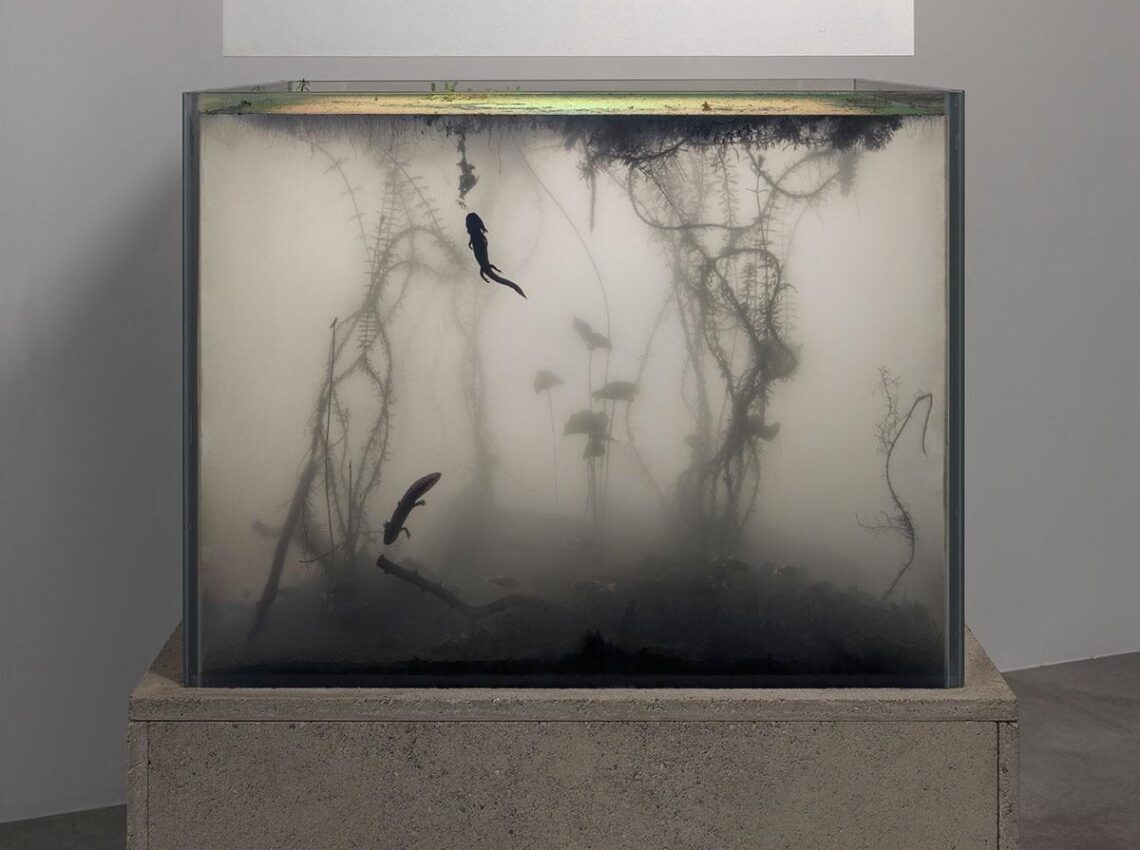
The aquarium lives on
At the back of the Manulife Centre, a luxury shopping mall along the “Mink Mile” in downtown Toronto, in an unassuming corridor of the movie theatre, is a piece of décor that is totally unremarkable for any corporate lobby, yet surprising when given a moment of pause: a saltwater fish tank, featuring a live coral reef. The fact that this and other publicly displayed aquaria have not yet been replaced with flat screens playing a 10-hour YouTube video on loop, “Best 4K Aquarium for Relaxation and Calm Sleep Music UHD,” stands out among today’s ornamental impulses, especially because of the…
Read More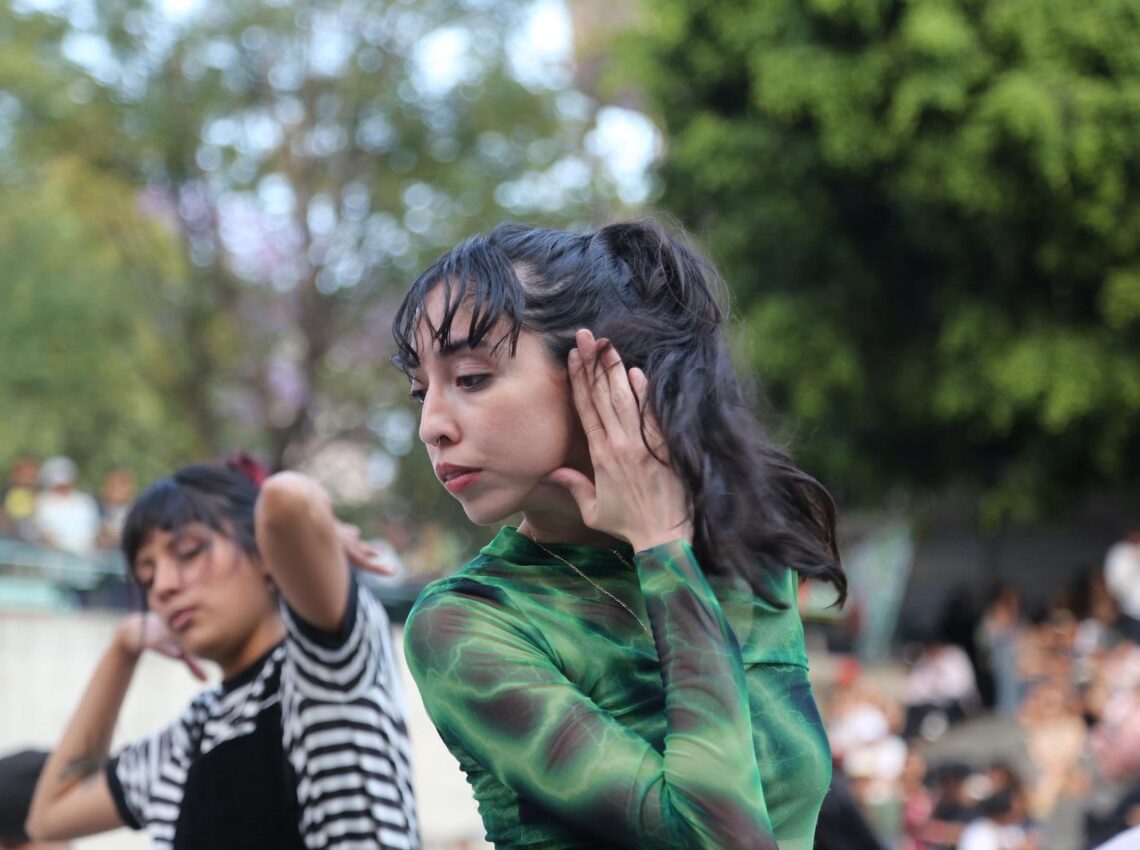
The dancer as a fugitive figure: in conversation with movement artist Camila Arroyo
When I first encountered Camila Arroyo’s work through the short film Soldaderas nearly four years ago, I was immediately struck by her ability to command space and express unspoken language in her movements. The short film for the fashion brand Sabrina Ol captures Arroyo as she navigates Mexico City’s streets. The film feels less like a performance and more like an intimate conversation with the environment, where movement, for her, was a private language that spoke to everyone, a pulse threading the soul to the surface of the world. From the very start of our conversations, it became clear that Arroyo’s journey…
Read More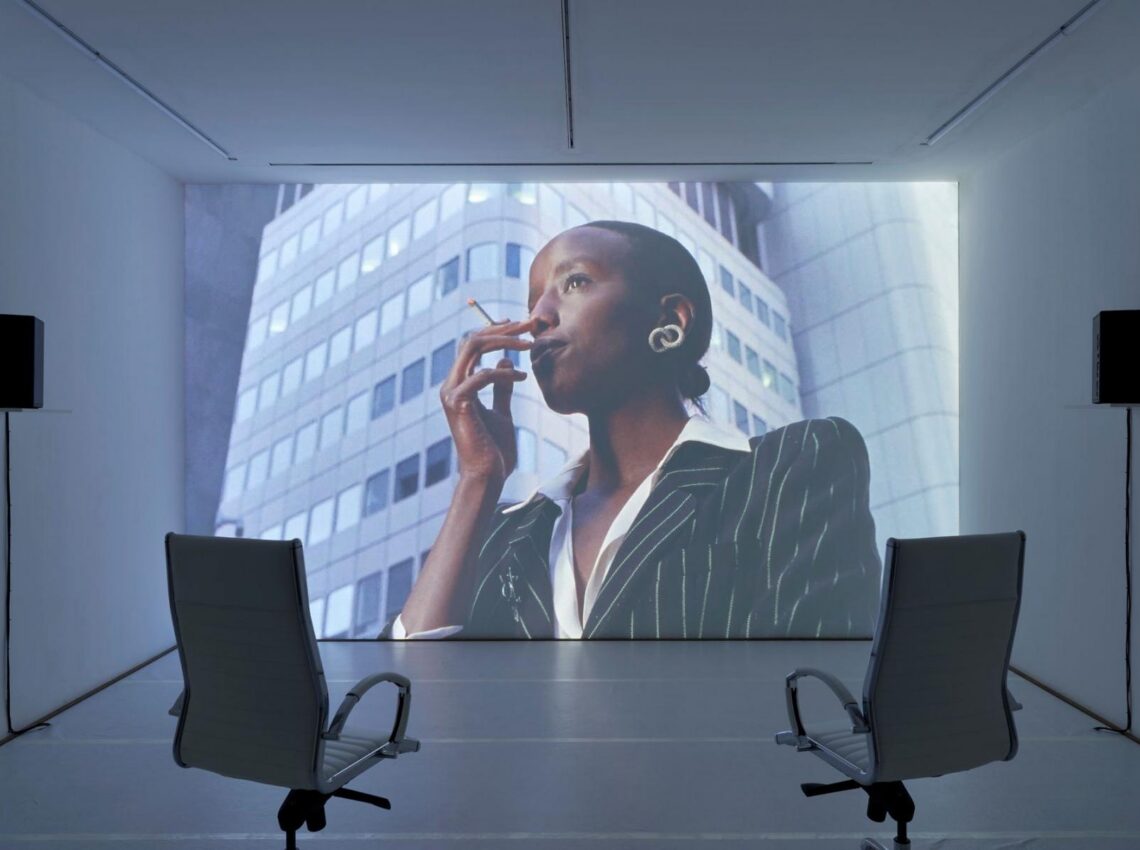
They create ghosts: in conversation with artist/filmmaker Valentin Noujaïm
In the dim blue hue of an office light, we see a pair of eyes gloss over a floor strewn with dead, bloodied bodies. The eyes shudder and look out somewhere, into the middle distance; not at the walls of the conference room that enclose them, not directly at the glow of a computer screen. Below, a pair of hands continues to maniacally hit a keyboard. These furtive movements belong to Claire, played by the inimitable Kayije Kagame, the protagonist of filmmaker and artist Valentin Noujaïm’s chilling 2024 short film, To Exist Under Permanent Suspicion (2024), who we watch, sit alone, but…
Read More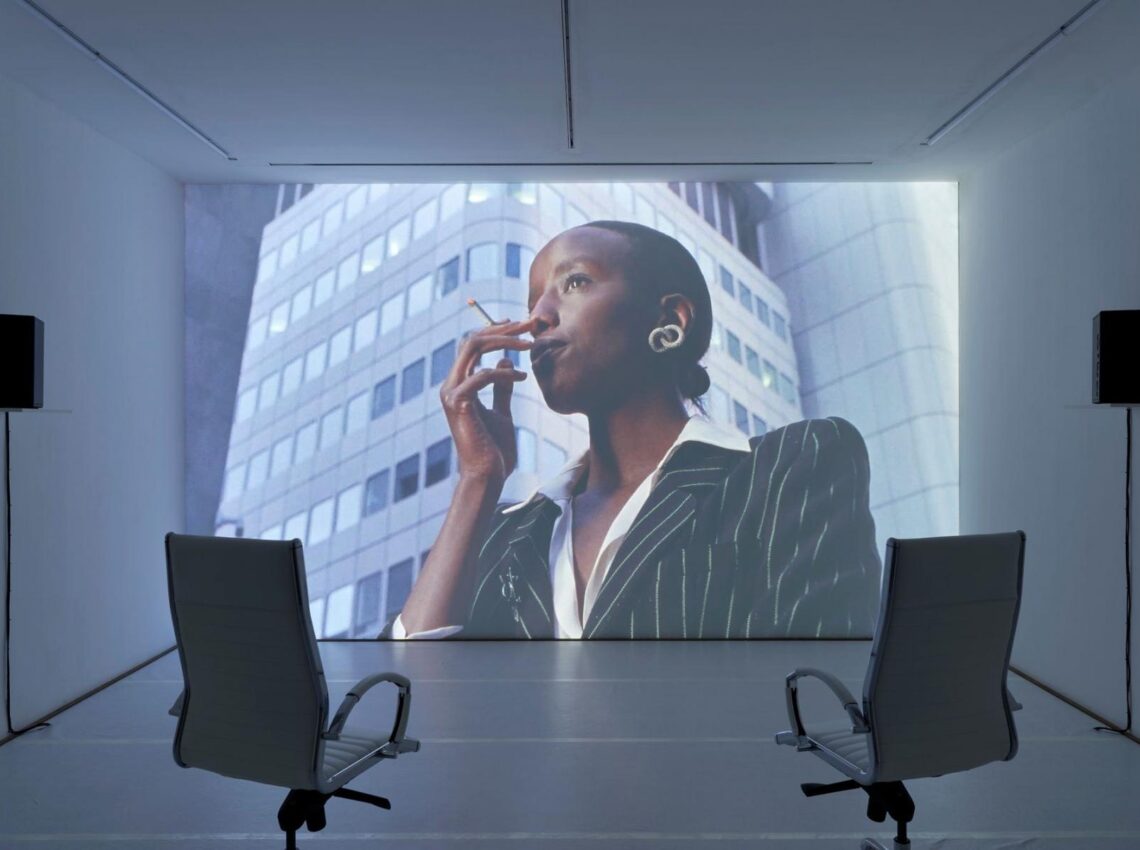
They create ghosts: in conversation with artist/filmmaker Valentin Noujaïm
In the dim blue hue of an office light, we see a pair of eyes gloss over a floor strewn with dead, bloodied bodies. The eyes shudder and look out somewhere, into the middle distance; not at the walls of the conference room that enclose them, not directly at the glow of a computer screen. Below, a pair of hands continues to maniacally hit a keyboard. These furtive movements belong to Claire, played by the inimitable Kayije Kagame, the protagonist of filmmaker and artist Valentin Noujaïm’s chilling 2024 short film, To Exist Under Permanent Suspicion (2024), who we watch, sit alone, but…
Read More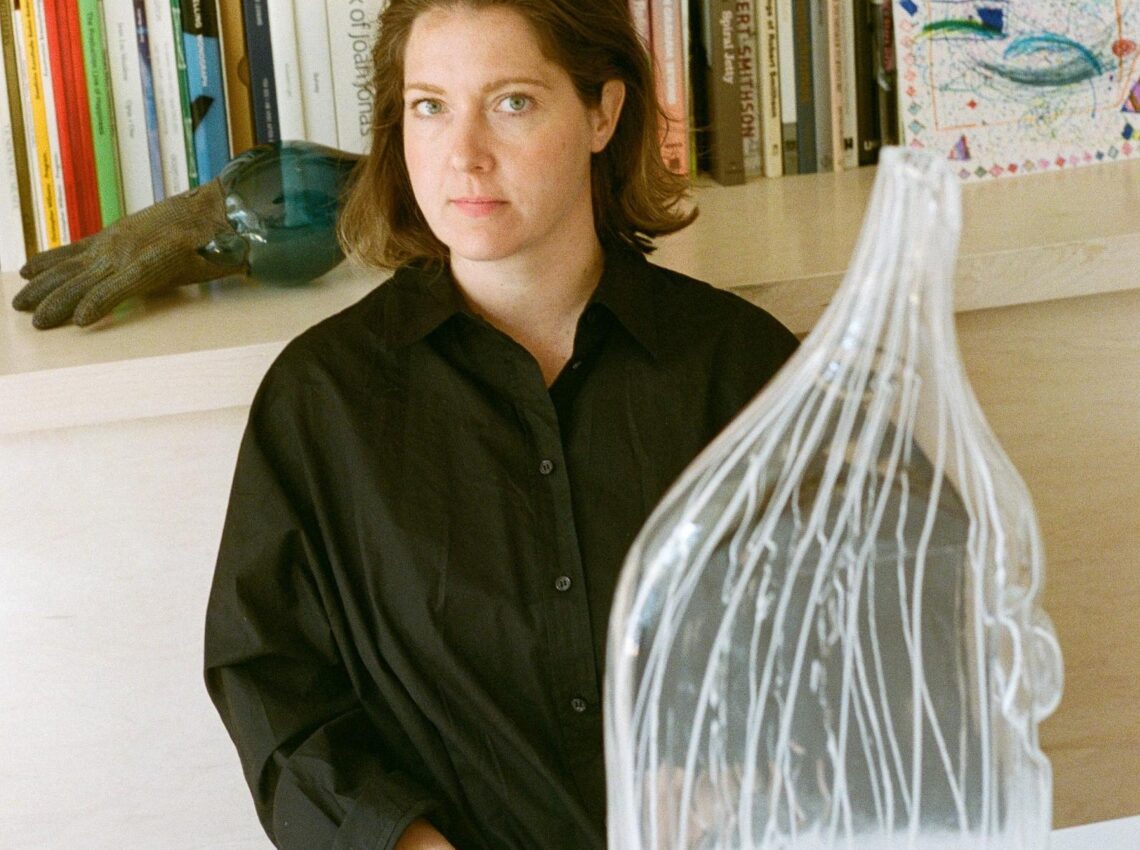
The iterating curiosities of artist Lorna Bauer
As I leave artist Lorna Bauer’s house after my visit to her home studio, our third meeting, she gives me a hug and wishes me luck on an upcoming move. We make plans for a drink on her back porch, “once things start to bloom.” Walking away I make notes on my phone about the visit. Patricia’s garden upstate. Daffodils, hydrangea, magnolia. Grouse like a dirt bike. Adair’s drawings. Pollinators. States of transformation. Like glass in its molten state. Like the latent image on film as developer meets fixer meets water meets heat. Like a flowering tree in April in Montréal. …
Read More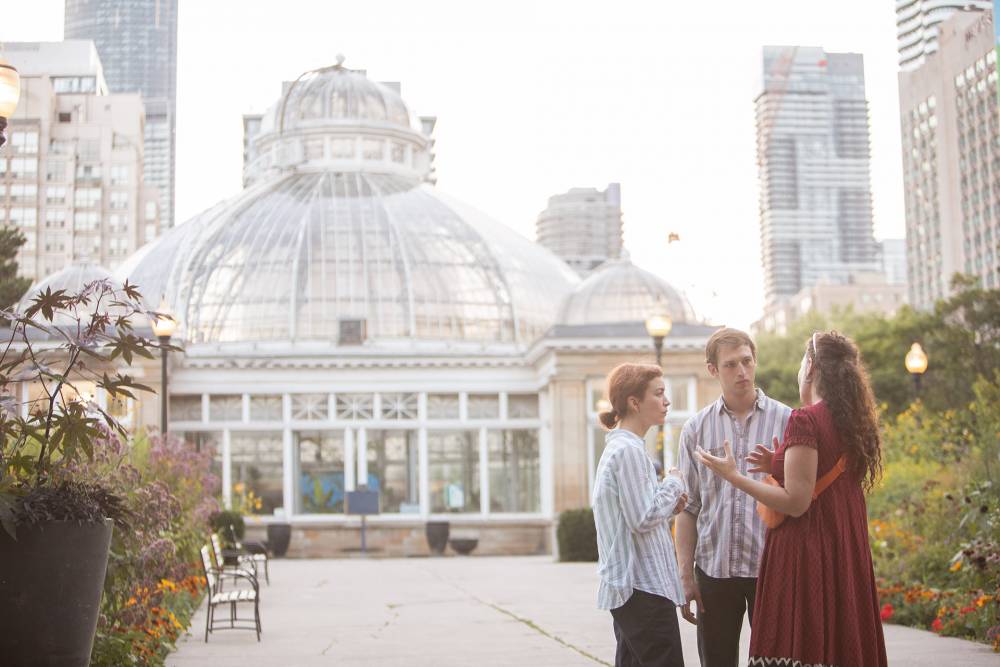
The Wonders of Watching: in conversation with filmmaker and artist, Naomi Jaye
The Canadian writer-director Naomi Jaye’s work frequently probes eccentric characters who pursue a peculiar agenda of routinized loneliness. Her first short, the madcap A Dozen for Lulu (2002), uses a stylized soundtrack (blaring alarm clocks, squeaky chairs) and an agile camera to depict two oddballs who share an enthusiasm for sprinkled donuts: a cheery, rollerblade-wearing ballerina who works at a hardware store, and a man in a fur cap who, with academic precision, nails the pastries to his workshop walls. Two of Jaye’s subsequent shorts, both starring the excellent Adrian Griffin, provide more subdued portraits of solitary souls. In The Raindrop Effect (2003), Griffin’s…
Read More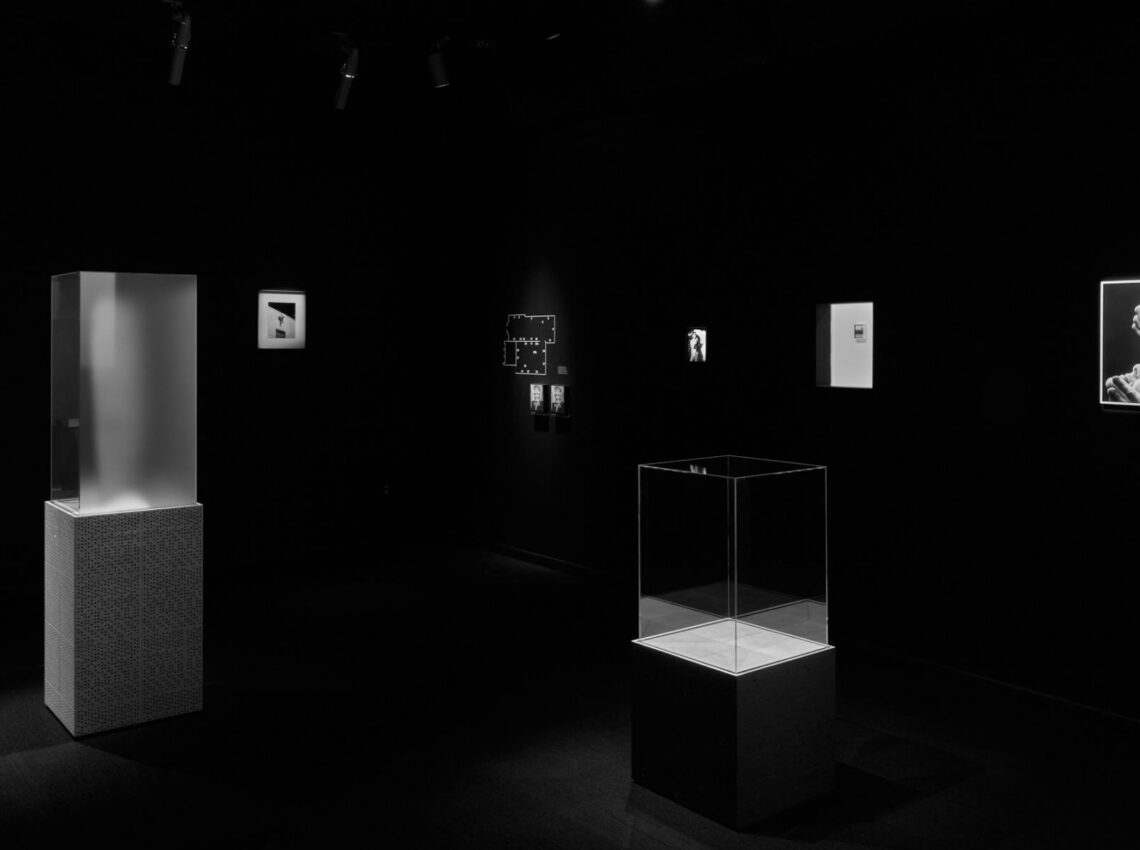
The Threshold Experience: in conversation with artist and writer Stanley Wolukau-Wanambwa
There is no vacancy in this world, no void, no vacuum. This is one thing I learn when I encounter the artwork and read the essays by Stanley Wolukau-Wanambwa. Every moment in life is durational, and every image we happen to see within it, an unfolding reel through which the social world is rehearsed, or composed, or erased, or betrayed, or determined. What do we desire from images? Whose lives are risked? In his installations and exhibitions, as in his precise, angular writing about art and photography, Wolukau-Wanambwa guides his viewers and readers into the darkly layered logics of idolatry, difficulty, and exposure…
Read More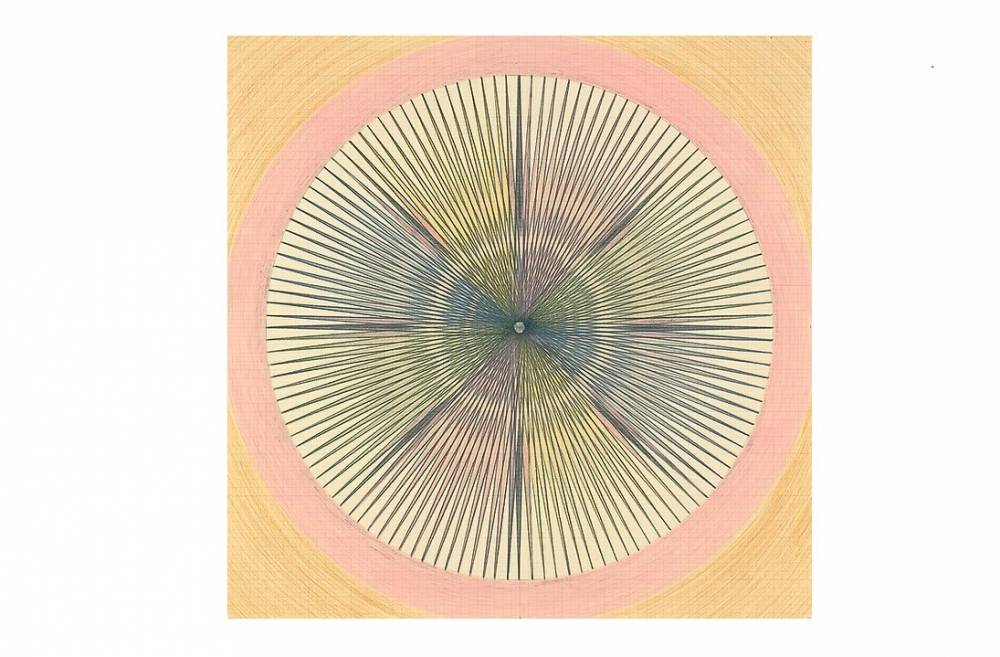
“like a bell, or tuning fork”: in conversation with poet and interdisciplinary artist Danielle Vogel
In this conversation, I speak with Danielle Vogel—poet, interdisciplinary artist, practicing herbalist, ceremonialist, and professor at Wesleyan University. Over the past 20 years, Vogel has written and published four poetry books that engage embodied poetics, feminist ecologies, somatics and ceremony. Our focus here is her most recent work, A Library of Light, published in 2024, which I first read in 2025, during one of the most intense winters in Montreal. It arrived at a time when I was seeking something I couldn’t quite name. I was so moved by the way Vogel writes through grief—not around it, not away from it, but through…
Read More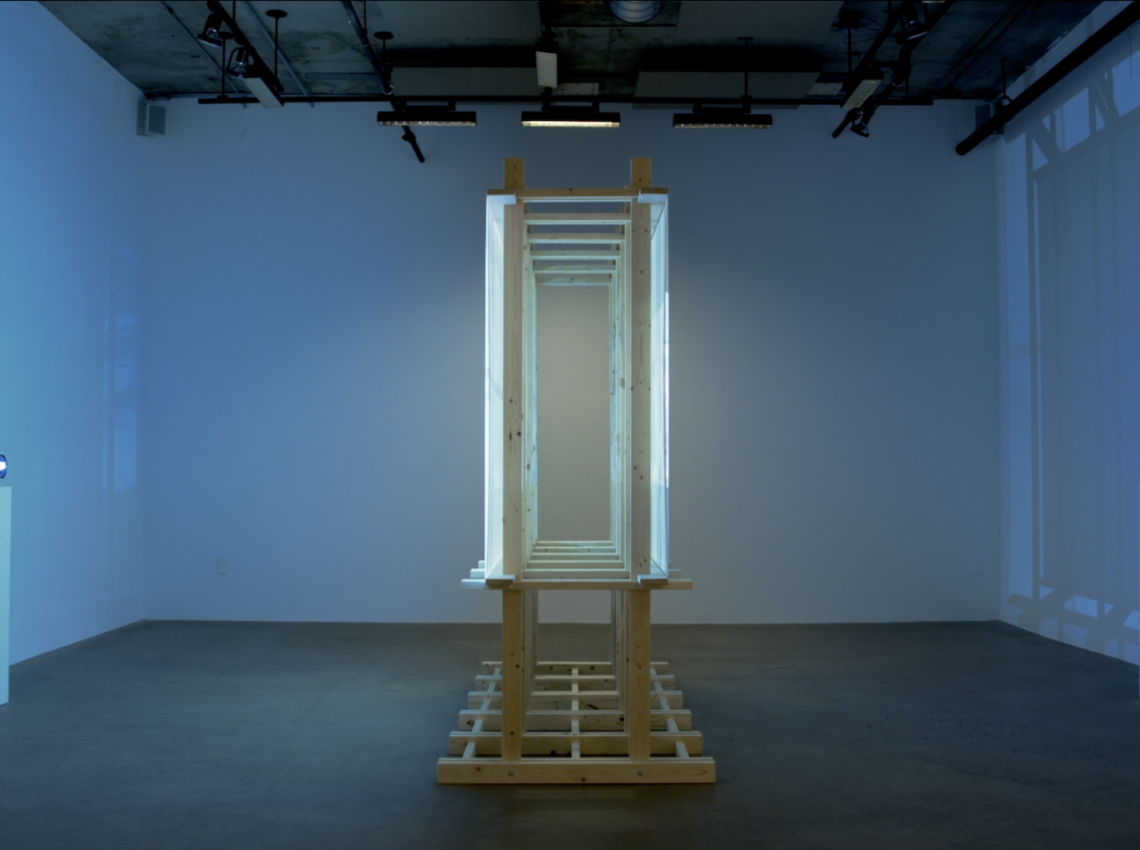
To Bury a Shadow: on monica maria moraru’s The Foundation Pit
Throughout the Balkans and Southeastern Europe there is a popular folktale that describes the tragic, sacrificial immurement of a woman to ensure the successful construction of a building. From Albania to Georgia, around 700 variations of the myth exist, including “The Bridge of Arta” in Greece, “The Building of Skadar” in Serbia, “Clement Mason” in Hungary, and “Master Builder Manole” in Romania. Though the constructions in these tales vary from bridges, to fortresses, to monasteries, they share the same basic narrative: a man sacrifices a woman against her will in order to create the foundation upon which a structure can be…
Read More